 Pin it
 There's something about the smell of smoked paprika hitting hot oil that makes you pause mid-chop and just breathe it in. I discovered this one-pan lasagne on a Tuesday evening when I had mushrooms threatening to turn and courgettes piling up in the crisper drawer, and I was determined not to waste them. The genius of layering everything in one skillet meant I could go from chopping board to table without hauling out half my kitchen, and honestly, that alone made it a keeper. What surprised me most was how the red lentils dissolved into the sauce, creating this rich, almost meaty texture that even the skeptics at my table didn't question.
I made this for my partner's parents one Sunday, and I remember standing at the oven window watching the top turn golden, slightly nervous about whether the layering would hold. When we pulled it out and the cheese was bubbling at the edges, there was this collective exhale around the table. His mum asked if it was restaurant food, and I got to smile and say no, just a well-stocked pantry and an idea. That moment when someone's eyes light up because a homemade meal surprised them—that's when cooking stops being a chore.
Ingredients
- Olive oil: Use a decent one here since it's the foundation; the flavor matters more than in a long-simmered stock.
- Onion and garlic: The aromatic base that everything else builds on, so don't rush the initial sauté.
- Mushrooms: Choose a mix if you can—cremini and portobello add earthiness that feels substantial.
- Courgettes: Dice them small so they soften into the sauce rather than staying chunky and watery.
- Smoked paprika: This is non-negotiable; it's what makes people pause and ask what that depth is coming from.
- Red lentils: They break down almost completely, creating body without needing meat—rinse them first to remove any dust.
- Canned tomatoes: Good quality matters; I've learned that cheap cans taste tinny no matter what you do.
- Soy sauce: Just a splash adds an umami note that rounds out the whole sauce beautifully.
- Béchamel sauce: The classic French lift that transforms layered pasta into something creamy and luxurious.
- Mature cheddar: Age matters here—younger cheese doesn't melt as smoothly or taste as complex.
- No-boil lasagne sheets: These are a genuine time-saver, though quality varies by brand.
- Mozzarella for topping: The fresh stuff browns better than pre-shredded, but pre-shredded works in a pinch.
Tired of Takeout? 🥡
Get 10 meals you can make faster than delivery arrives. Seriously.
One email. No spam. Unsubscribe anytime.
Instructions
- Preheat and gather:
- Get your oven to 200°C (180°C fan) and set out everything in the order you'll need it, so there's no frantic searching while something's burning on the stove.
- Build the base:
- Heat oil in your ovenproof pan over medium heat, then soften the onion and garlic for two minutes—you want them fragrant and starting to soften, not brown. This is where the foundation of flavor gets laid.
- Add the vegetables:
- Throw in your carrot, pepper, mushrooms, and courgettes and let them cook down for five to six minutes, stirring occasionally so nothing sticks or browns unevenly. The pan will smell incredible at this point.
- Bloom the spices:
- Stir in the smoked paprika, oregano, thyme, and chili flakes with the tomato paste and cook for exactly one minute—this wakes up the spices and deepens their flavor rather than letting them taste raw. Watch the mixture darken slightly; that's how you know it's working.
- Add the main elements:
- Pour in the tomatoes, soy sauce, lentils, and stock, then bring everything to a simmer and cover loosely. Let it bubble gently for fifteen to twenty minutes, stirring now and then, until the lentils have softened into the sauce and everything tastes melded and intentional. Season with salt and pepper once you can actually taste each component.
- Make the béchamel:
- In a separate saucepan, melt the butter and whisk in the flour, cooking for one minute so it loses that raw flour taste. Gradually pour in the milk while whisking to avoid lumps, then keep stirring until it thickens to something that coats the back of a spoon, about five minutes. Remove from heat, add the nutmeg and cheese, taste, and season with salt and white pepper.
- Layer thoughtfully:
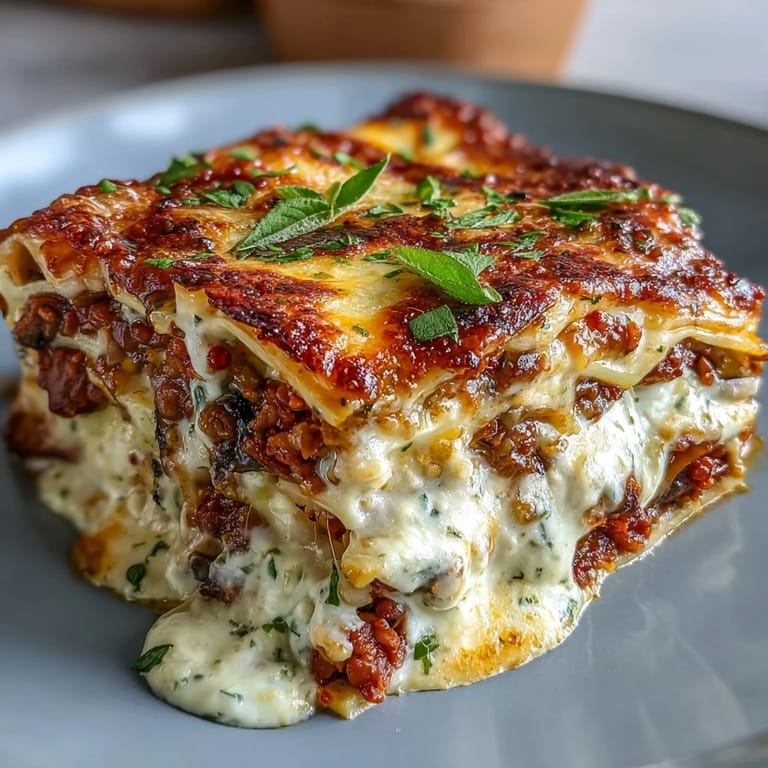
- This is the puzzle piece part—remove half your bolognese and set it aside, then spread a third of the béchamel over what remains in the pan. Lay lasagne sheets on top, breaking them to fill gaps, then spread half the reserved bolognese over the pasta and add another third of béchamel.
- Final assembly:
- Top with the last of the bolognese, finish with a final layer of lasagne sheets, and pour the remaining béchamel over the top, making sure every edge is covered. Scatter the mozzarella over everything so it melts into golden-brown patches.
- Bake covered:
- Tent the pan loosely with foil and bake for twenty-five minutes so the lasagne softens and everything melds together without the top drying out. The foil is key—it steams the pasta gently.
- Finish and brown:
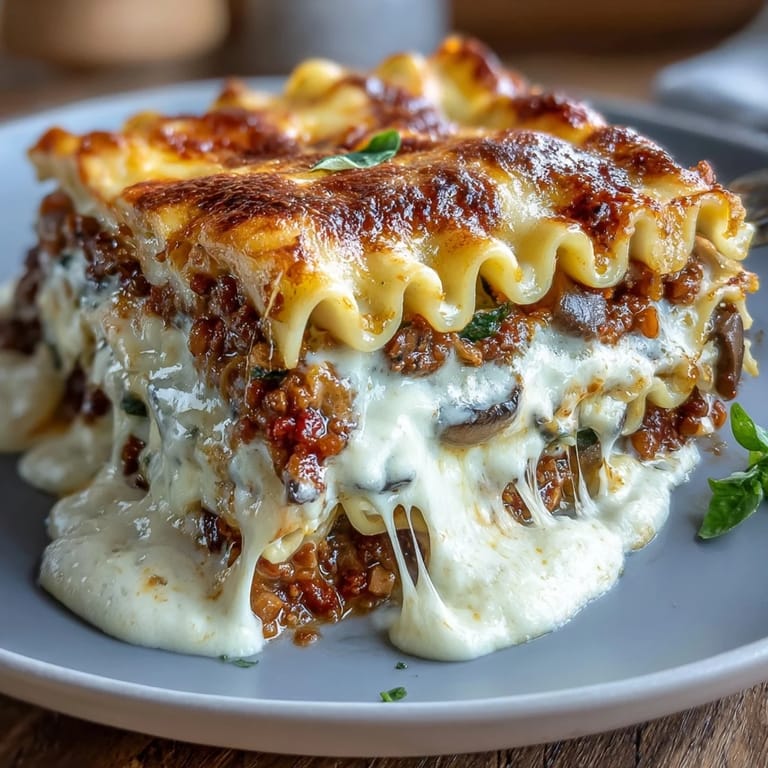
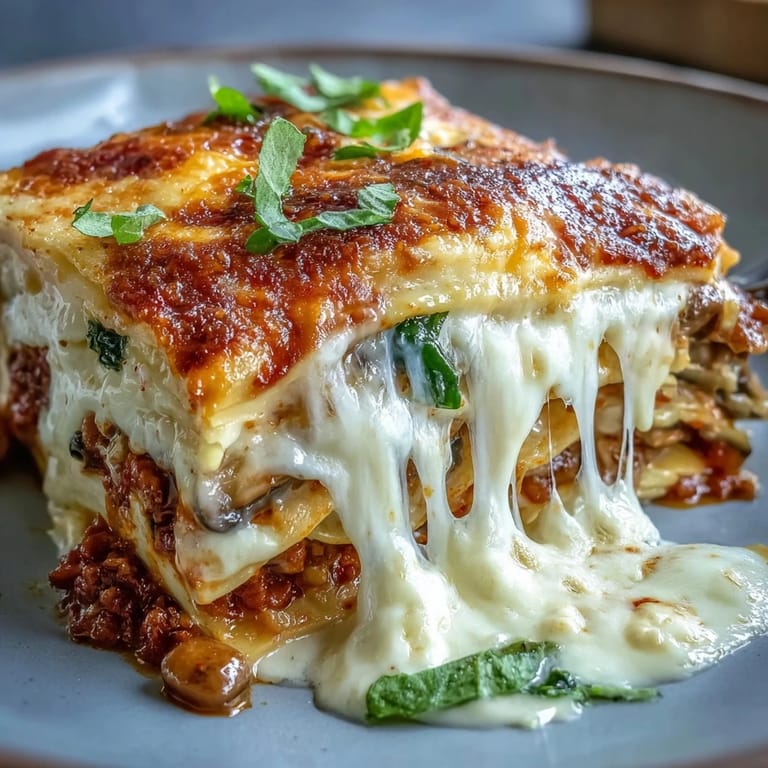
- Remove the foil and bake another ten to fifteen minutes until the cheese is golden and bubbling at the edges and you can see slight browning where the sauce peeks through. This is the step that makes it look restaurant-worthy.
- Rest and serve:
- Let it sit for ten minutes—this sounds like a small thing, but it lets everything set so you get clean slices instead of a gorgeous mess. Scatter fresh basil over the top if you have it.
 Pin it
 My friend once told me that this was the first vegetarian dish she'd made that felt like real cooking rather than just avoiding meat, and I think about that comment every time I make it. There's something about layering and patience and actual technique that makes people feel like they're eating something that was made with intention.
The Smoky Flavor Secret
The smoked paprika does something almost magical here—it creates a depth that makes you wonder if there's meat in the sauce. The trick is blooming it in the oil and tomato paste for that full minute before adding liquid, which releases its flavor compounds and distributes them evenly. I once tried adding it at the end, thinking I'd layer flavor, and it just tasted like I'd sprinkled spice on top of finished food. Now I'm evangelical about that one-minute bloom.
Why Red Lentils Work Better Than You'd Expect
Red lentils dissolve almost completely into a sauce, creating a dense, almost creamy texture that tricks people into thinking there's cream or meat involved. Unlike brown or green lentils, which stay whole and distinct, reds break down into the background and build body rather than adding texture. The first time I used them, I was skeptical—they seemed too fast-cooking, too delicate—but they transformed the sauce into something rich and substantial that held together beautifully when baked.
Building Layers With Confidence
Layering in a single pan feels trickier than it actually is, but the order matters more than perfection. Start with sauce on the bottom so nothing sticks, alternate sauce and pasta, and finish with sauce and cheese on top so everything browns evenly. If your lasagne sheets don't fit perfectly, break them—nobody will know, and gaps just let sauce through. The layers don't need to be pristine; they just need to be there.
- Break lasagne sheets to fit your pan rather than fighting with sheets that are the wrong size.
- Spread each layer gently with a spoon or spatula rather than pushing down hard, which compresses everything and makes it dense.
- Leave a quarter-inch of space at the rim so nothing bubbles over and burns on the oven floor.
 Pin it
 This lasagne sits at that beautiful intersection of comforting and impressive, practical and surprising. Make it, and you'll find yourself making it again, and then teaching someone else how to make it.
Recipe FAQs
- → Can I make this vegan?
Absolutely. Swap dairy butter for plant-based spread, use your favorite unsweetened plant milk in the béchamel, and choose vegan cheese alternatives. The result remains just as creamy and satisfying.
- → What gives the sauce its smoky flavor?
Smoked paprika is the key ingredient. Just one teaspoon infuses the entire dish with a wonderful depth and subtle warmth that complements the earthy lentils and vegetables perfectly.
- → Do I need to cook the lasagne sheets first?
No need. Use no-boil lasagne sheets directly—they'll cook beautifully in the sauce and béchamel during baking, absorbing flavors while becoming perfectly tender.
- → How long should I let it rest before serving?
Allow the dish to stand for about 10 minutes after baking. This helps the layers set, making it easier to serve clean, neat portions that hold their shape on the plate.
- → Can I add extra vegetables?
Certainly. Spinach, eggplant, or butternut squash all work wonderfully. Just keep the total quantity balanced so the layers aren't too thick for even cooking.
- → How should I store leftovers?
Keep refrigerated in an airtight container for up to 3 days. Reheat individual portions in the microwave, or cover the whole dish with foil and warm in a 180°C oven until heated through.