 Pin it
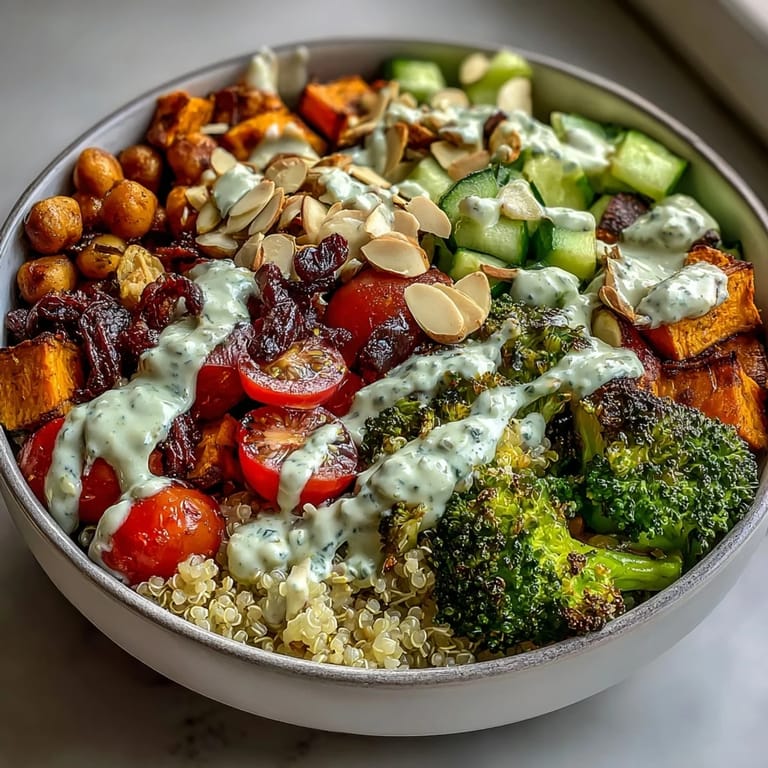
 Sunday afternoons in my kitchen used to feel chaotic until I discovered meal prep bowls, not out of some wellness trend but pure necessity. My friend Sarah showed up one evening with five identical containers stacked like a tower, each packed with this explosion of colors—golden quinoa, charred sweet potato, emerald greens—and suddenly my entire week shifted. She handed me one, I ate it cold straight from the fridge at midnight while working, and it tasted better than anything I'd rushed to order. That moment changed how I thought about cooking: why make something complicated when layered simplicity could taste this good and last all week?
I made these bowls for a hiking trip with coworkers, packed them in a cooler at 6 AM without really thinking it through, and by lunchtime at the summit everyone was asking what I'd brought instead of opening their sad sandwiches. The roasted vegetables had deepened in flavor, the tahini dressing had settled into every grain of quinoa, and somehow the whole thing felt intentional even though I'd just thrown it together the night before. That's when I realized this wasn't just meal prep—it was actually good food that happened to keep.
Ingredients
- Quinoa, cooked: This grain holds up beautifully through the week without getting mushy, and it actually absorbs the dressing flavor better on days four and five than when fresh.
- Sweet potato: The roasting caramelizes the edges, creating sweetness that balances the earthiness of the beans and greens.
- Broccoli florets: They stay firm when roasted properly, and the charred bits add texture that keeps every bite interesting.
- Red bell pepper: Adds brightness and crunch without overpowering the other flavors.
- Olive oil, sea salt, black pepper: The holy trio for roasting—don't skip proper seasoning or your vegetables will taste forgettable.
- Cherry tomatoes and cucumber: Kept fresh and raw so they provide contrast to the warm roasted components.
- Baby spinach or kale: Kale holds up better if you're keeping these bowls five full days, spinach if you're eating them faster.
- Red onion, thinly sliced: A thin slice gives sharp flavor without overwhelming bites, and it pickles slightly in the dressing.
- Black beans and chickpeas: Two beans means two different textures and enough protein to actually sustain you through an afternoon of work.
- Roasted almonds and seeds: These are your crunch insurance—the moment you add dressing, this is what keeps things from becoming mushy.
- Tahini dressing: The game-changer that ties everything together; it's creamy, earthy, and gets better as it sits.
Tired of Takeout? 🥡
Get 10 meals you can make faster than delivery arrives. Seriously.
One email. No spam. Unsubscribe anytime.
Instructions
- Heat your oven and prep your workspace:
- Get the oven to 425°F and line a baking sheet with parchment paper—this prevents sticking and makes cleanup actually enjoyable. Having everything ready means you're not scrambling while vegetables sit waiting.
- Toss and season your roasting vegetables:
- In a bowl, coat the sweet potato, broccoli, and bell pepper with olive oil, sea salt, and black pepper until everything glistens. The oil is what creates those caramelized edges, so don't be shy with it.
- Roast until the edges char:
- Roast vegetables for 25 to 30 minutes, stirring halfway through:
- You're looking for tender insides and slightly darkened edges—that's where the flavor lives. If something looks pale at 25 minutes, give it the full 30.
- Cook your quinoa while vegetables roast:
- Follow package instructions and let it cool completely so it doesn't wilt the fresh vegetables later. I usually rinse it under cold water to speed this up.
- Make the tahini dressing:
- Whisk tahini, lemon juice, water, maple syrup, minced garlic, cumin, salt, and pepper until smooth and creamy. If it's too thick, add water a tablespoon at a time until it reaches a pourable consistency—this matters more than you'd think.
- Layer your containers strategically:
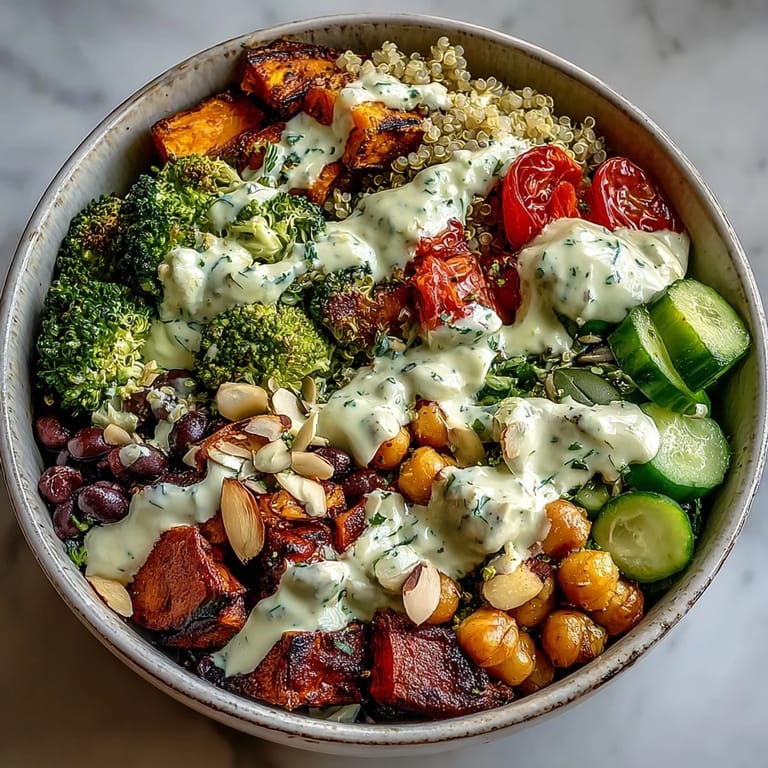
- Start with quinoa as your base (it absorbs dressing), then add roasted vegetables, fresh vegetables, beans, and finally nuts and seeds on top so they stay crunchy. This order keeps textures intact through the week.
- Dress carefully:
- Drizzle dressing over each bowl right before eating, or pack it separately if you're keeping these more than three days. The dressing keeps the salad fresh-tasting instead of soggy.
 Pin it
 My partner came home one Wednesday to find me eating bowl number four from the fridge, standing at the counter, completely absorbed in how good the flavors had melded overnight. He asked if I'd made it, and I realized I'd forgotten to mention these bowls existed, which meant I hadn't been stress-eating throughout the week or ordering expensive lunches out of desperation. That quiet moment—just good food and the absence of usual chaos—meant more than any recipe could capture.
Why This Works as a Week-Long Solution
The genius of this bowl isn't about discipline or willpower; it's about flavor actually improving with time. The quinoa absorbs the tahini dressing, the roasted vegetables develop deeper sweetness, and somehow everything tastes more intentional on day four than it did fresh on Sunday. You're not forcing yourself to eat the same thing—you're discovering that what tasted good at home tastes even better cold from the office fridge, which changes everything about how you approach meal prep.
Customizing for Your Seasons and Preferences
Summer calls for zucchini instead of sweet potato, fall wants roasted cauliflower, winter is crying out for carrots and beets, and spring means you barely need to roast anything because fresh vegetables are finally worth eating raw. The beauty here is that you're not locked into one formula—you're learning what roasts well, what keeps fresh, and what flavors work together, which means after one batch you're inventing your own combinations.
Storage Wisdom and Flavor Evolution
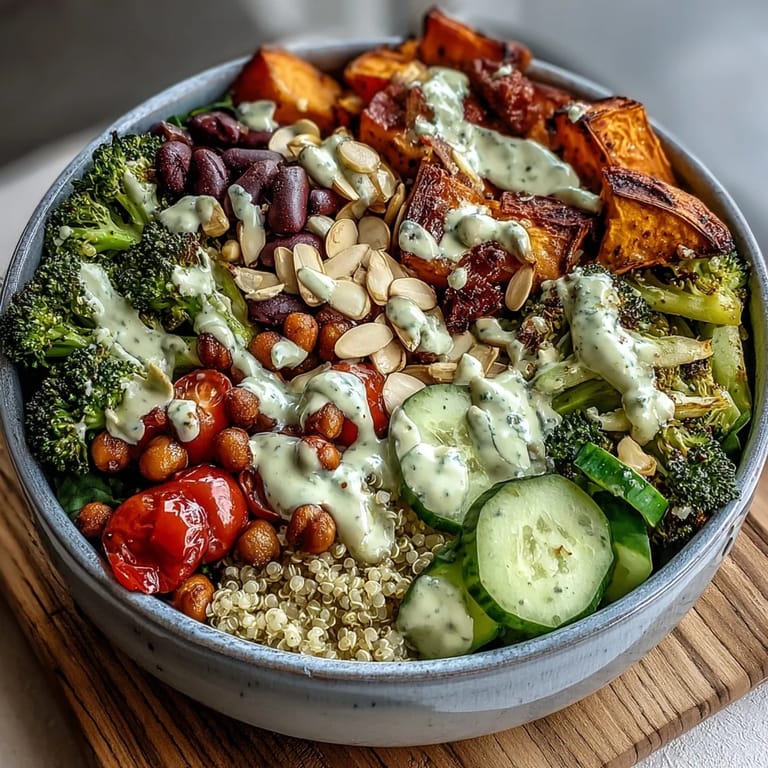
These bowls keep for five days refrigerated, though I've found the sweet spot is actually three to four when you're packing dressing separately. The vegetables soften slightly, which sounds like a flaw until you realize it means they've absorbed all the flavors around them, becoming almost luxurious instead of crisp. Here's what I've learned matters most:
- Keep dressing separate until you're ready to eat if you want crunch; combine everything two hours ahead if you prefer a more unified texture.
- Kale honestly outlasts spinach by two days, so choose your greens based on how long you're storing these bowls.
- The nuts stay crunchy longest when kept completely separate, so add them just before eating if this bowl is your Monday-Friday lunch strategy.
 Pin it
 This bowl became my anchor for chaotic weeks, the thing I reached for when nothing else felt manageable. It taught me that simple food made intentionally is always better than complicated food made in a rush.
Recipe FAQs
- → Can I substitute quinoa with other grains?
Yes, brown rice or farro are excellent alternatives that complement roasted vegetables and beans well.
- → How should the bowl be stored for freshness?
Store the components separately if possible, especially the tahini dressing, in airtight containers refrigerated up to five days.
- → What nuts and seeds are included, and can they be modified?
Roasted almonds, pumpkin seeds, and sunflower seeds provide crunch, but you can swap them out with other nuts or seeds depending on preference or allergies.
- → Is there a way to add more richness to the bowl?
Adding feta cheese or avocado adds creaminess and depth, though avocado will change storage life and feta is not vegan.
- → Can the dressing be made spicy?
Yes, adding sriracha or chili flakes to the tahini dressing can add a nice spicy kick.