 Pin it
 My kitchen smelled like toasted spices the afternoon I first made this soup, and I wasn't even trying to impress anyone—just myself on a Wednesday when the market had the most beautiful butternut squash. Something about the way the cubes caramelized in the oven, turning the edges crispy and golden, made me pause and actually pay attention to what I was making. By the time I blended it all together, that velvety orange warmth filling my pot, I knew this was the kind of soup you don't forget.
I served this to my sister during her first week of a new job, when she was exhausted and eating whatever was quickest. She sat at my kitchen counter with a bowl cradled in both hands, and I watched her shoulders actually relax as she ate. She asked for the recipe that night, which felt like the highest compliment—not because it was fancy, but because it felt like exactly what she needed.
Ingredients
- Butternut squash (1 medium, about 2 lbs): Roasting it first brings out natural sweetness and creates a deeper flavor than if you simmered it raw in broth, plus the edges get crispy which adds texture.
- Red lentils (3/4 cup): These break down completely while cooking, thickening the soup naturally and adding protein without needing a separate step.
- Carrots and onion: The onion becomes silky when sautéed, and carrots add subtle sweetness that complements the squash.
- Garlic (3 cloves): Added after the carrots soften so it doesn't burn and turn bitter—this matters more than you'd think.
- Vegetable broth (4 cups): Use a good quality broth if you can; it's the backbone of the flavor and there's nowhere to hide.
- Warming spices (cumin, coriander, turmeric, cinnamon, smoked paprika): Each one adds a different layer—toasting them briefly in the hot pot before adding liquid releases their essential oils and makes them taste alive rather than dusty.
- Olive oil (2 tbsp total): One tablespoon goes on the squash for roasting, the other starts your aromatics, so you're controlling the fat carefully.
- Lemon juice: The squeeze at the end brightens everything and prevents the soup from tasting heavy or one-note.
Tired of Takeout? 🥡
Get 10 meals you can make faster than delivery arrives. Seriously.
One email. No spam. Unsubscribe anytime.
Instructions
- Get your squash roasting:
- Preheat your oven to 400°F and line a baking sheet with parchment so cleanup is easier. Toss your cubed butternut squash with a tablespoon of olive oil, a good pinch of salt, and black pepper, then spread it in a single layer and let it roast for 25 to 30 minutes until the edges are golden and caramelized and a fork pierces the flesh easily.
- Build your flavor base:
- While the squash is roasting, warm the remaining tablespoon of olive oil in a large pot over medium heat and add your chopped onion and carrots. Let them soften for about 5 minutes, stirring occasionally, then add your minced garlic and cook for just 1 minute more until fragrant but not browned.
- Toast the spices:
- Add your cumin, coriander, turmeric, cinnamon, and smoked paprika directly to the pot and stir constantly for about 30 seconds. This is a short step but crucial—you'll actually smell the spices wake up and intensify, and that's how you know they're releasing their full flavor.
- Bring it all together:
- Add your roasted squash, rinsed red lentils, vegetable broth, and water to the pot. Bring everything to a boil, then reduce the heat and let it simmer uncovered for about 20 minutes until the lentils are completely soft and starting to fall apart.
- Blend until silky:
- Remove the pot from heat and use an immersion blender to puree the soup until it's smooth and velvety. If you don't have an immersion blender, carefully transfer the soup in batches to a regular blender, being careful not to overfill it, then pour it back into the pot.
- Finish and season:
- Stir in the juice from half a lemon, taste a spoonful, and adjust the salt, pepper, and spices to your preference. The lemon brightens everything and prevents the soup from feeling heavy.
- Serve with care:
- Ladle the soup into bowls and garnish with fresh cilantro or parsley if you have it. A sprinkle of flaky salt on top adds a nice finishing touch.
 Pin it
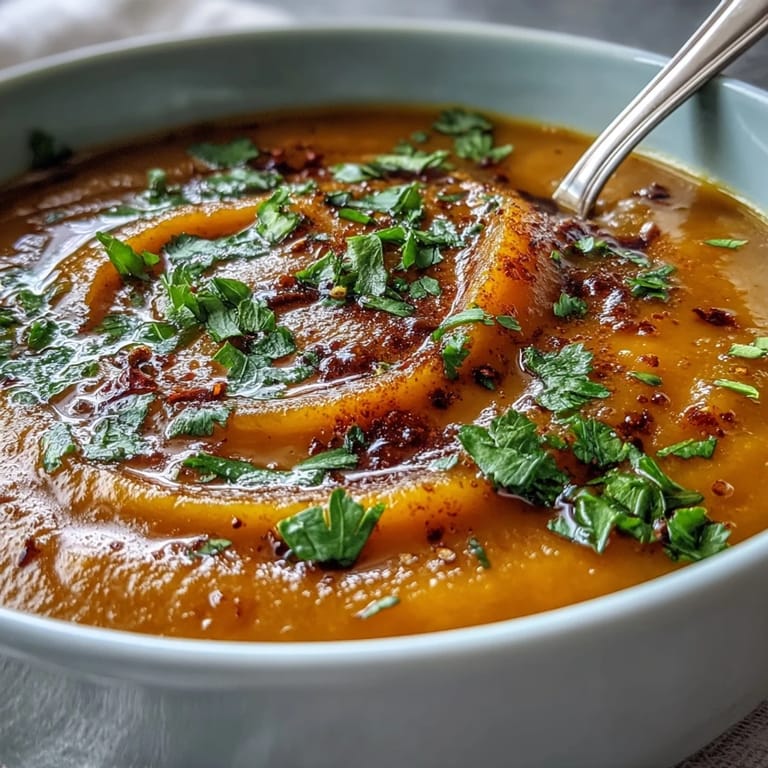
 There's a moment, right after you blend this soup, where it transforms from a pot of ingredients into something that looks and feels completely different. The color shifts to this deep, warm orange, and the steam rising from it carries the full aroma of everything you've built. That moment still gets me every time I make it.
Making It Your Own
This soup is forgiving and wants to accommodate what you have on hand. If you can't find red lentils, yellow lentils work just as well and break down similarly, though they're slightly less vibrant in color. You could add a quarter cup of coconut milk before blending if you want something extra creamy, or stir in a teaspoon of grated fresh ginger along with the garlic if you're looking for more zing.
Storage and Serving
This soup keeps beautifully in the refrigerator for up to four days, and it actually tastes even better the next day when the flavors have settled and deepened. You can freeze it for up to three months in airtight containers, leaving a little space at the top for expansion. Reheat it gently on the stovetop with a splash of broth or water to loosen it back to the consistency you like.
Why This Matters
A bowl of this soup delivers real nutrition—fiber from the lentils, beta-carotene from the squash, and anti-inflammatory compounds from the spices—but what makes it stick with you is how it makes you feel. It's the kind of food that nourishes without feeling virtuous or restrictive, the kind you make because you actually want it.
- Serve it alongside crusty bread, gluten-free if that's what you need, for soaking up every last spoonful.
- A dollop of yogurt on top adds creaminess and tang if you're not keeping it strictly vegan.
- Make extra and keep it on hand for mornings when you need something grounding before a difficult day.
 Pin it
 This soup has become my answer to the question of what to cook when I want something that feels both comforting and intentional. Make it for yourself, make it for someone who needs it, and notice how something so simple can feel surprisingly complete.
Recipe FAQs
- → How long does this soup keep in the refrigerator?
The soup stores beautifully in an airtight container for 4-5 days. The flavors actually deepen and improve after a day or two, making it excellent for meal prep.
- → Can I freeze this soup?
Absolutely! Freeze in portion-sized containers for up to 3 months. Thaw overnight in the refrigerator and reheat gently on the stovetop, adding a splash of broth if needed.
- → What can I use instead of red lentils?
Yellow lentils work perfectly as a substitute. Avoid green or brown lentils as they hold their shape and won't create the same velvety texture.
- → Do I have to roast the squash first?
Roasting concentrates the natural sugars and adds depth, but you can skip it. Simply cube the raw squash and add it with the lentils—just increase simmering time by 10-15 minutes.
- → How can I make this soup even creamier?
Stir in ¼ cup coconut milk or full-fat canned coconut milk before blending. For a nutty variation, try adding 2 tablespoons of tahini or cashew butter.
- → What bread pairs well with this soup?
Crusty gluten-free bread, naan, or a simple slice of sourdough works wonderfully. The texture contrasts beautifully with the smooth, velvety broth.