 Pin it
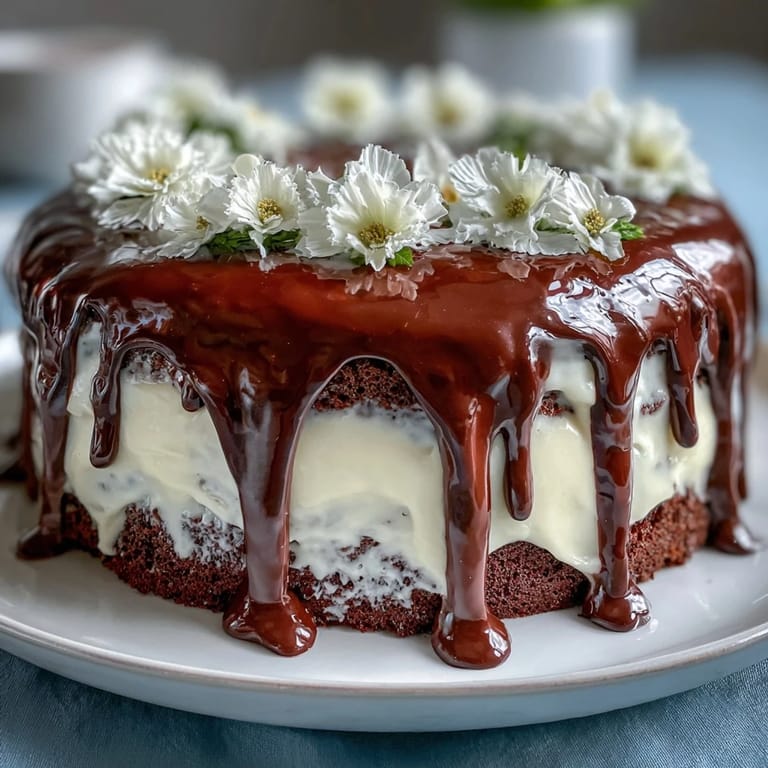
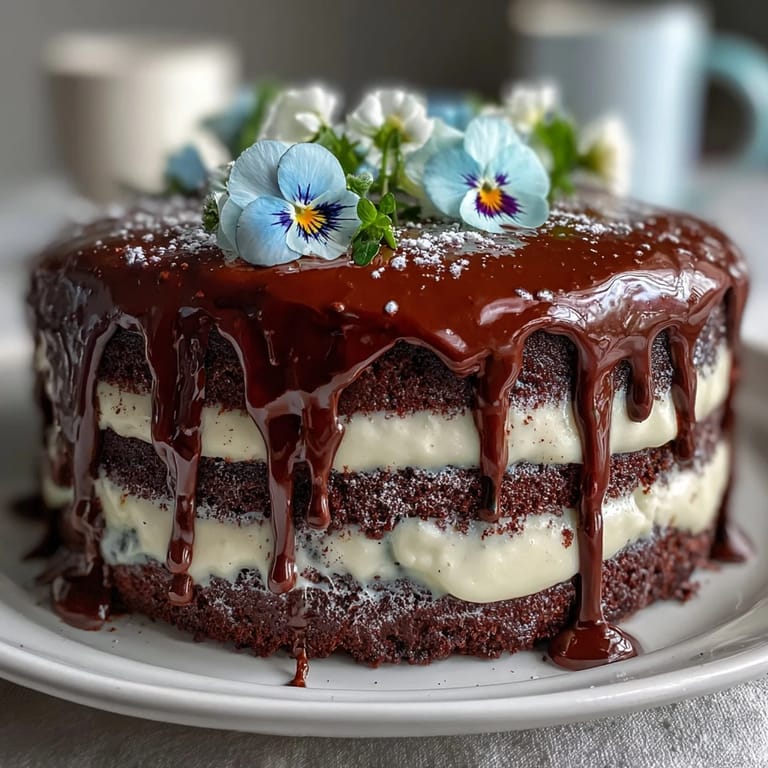
 Last spring, my neighbor dropped by with a bundle of violets from her garden, and something about their delicate purple petals made me want to bake something equally beautiful. I'd been craving a cake that wasn't just delicious but could actually make people pause when they saw it—something that tasted like sunshine and felt like celebration. That's when this lemon layer cake came together, three soft vanilla layers wrapped in the brightest lemon frosting, topped with that dramatic white chocolate drip and those impossible-to-ignore edible flowers. It's become my go-to cake for moments that deserve a little extra magic.
I made this cake for a spring baby shower two years ago, and I watched a grandmother lean over to smell the flowers on top before she even took a bite—that moment told me everything about why this cake works so well. There's something about the combination of edible florals and zesty lemon that just screams springtime without feeling forced or overly fussy. The cake itself stayed moist through the afternoon, the frosting held its shape under the weight of the decorations, and people actually asked for the recipe, which never happens.
Ingredients
- All-purpose flour: The foundation of your sponge—sift it with the baking powder and salt to avoid lumps and ensure the cake rises evenly and stays tender.
- Unsalted butter: Use it softened and at room temperature so it creams properly with sugar and incorporates air, which is what makes the cake light and fluffy.
- Granulated sugar: This creams with butter to trap air bubbles, and that's the secret to your cake's delicate crumb.
- Eggs: Room temperature eggs blend into the batter more smoothly and create a more cohesive structure than cold ones.
- Vanilla extract: A full tablespoon gives the cake depth without overwhelming the subtle lemon flavor that comes in the frosting.
- Whole milk: Bring it to room temperature to avoid shocking the batter and keep the texture consistent.
- Powdered sugar for frosting: Sifting it removes lumps and makes the frosting silky instead of grainy.
- Fresh lemon juice and zest: The zest holds the most flavor—don't skip it—and fresh juice is non-negotiable for brightness.
- White chocolate chips: The ganache needs good quality chocolate or it'll seize when you add the cream, so avoid the cheapest option.
- Edible flowers: Buy from a specialty grocer or trusted seed company, never from a florist who may have used pesticides.
Tired of Takeout? 🥡
Get 10 meals you can make faster than delivery arrives. Seriously.
One email. No spam. Unsubscribe anytime.
Instructions
- Prep your pans and heat your oven:
- Preheat to 350°F while you grease three 8-inch round pans and line them with parchment paper cut to fit the bottom. This prevents sticking and makes turning out the layers so much easier.
- Combine your dry ingredients:
- In a medium bowl, whisk together flour, baking powder, and salt until evenly mixed. Whisking aerates the flour and distributes the baking powder evenly, which helps your cake rise consistently.
- Cream butter and sugar:
- Beat them together in a large bowl for about 3 to 4 minutes until the mixture is pale and fluffy—this is where the air gets trapped that makes your cake light. Don't rush this step; you'll see the color change and the texture become almost mousse-like.
- Add eggs one at a time:
- Beat well after each egg so it fully incorporates before you add the next one. This ensures a stable emulsion and prevents the batter from breaking or looking curdled.
- Stir in vanilla:
- Mix it in after the eggs are fully incorporated so it distributes evenly throughout the batter.
- Alternate flour and milk:
- Start with a third of the flour mixture, then half the milk, then another third of flour, then the remaining milk, and finish with the last of the flour. Mixing just until combined keeps the cake tender instead of tough.
- Divide and bake:
- Distribute the batter evenly among the three pans and bake for 25 to 30 minutes until a toothpick comes out clean. The cakes should smell sweet and vanilla-forward when they're done.
- Cool properly:
- Let them rest in the pans for 10 minutes so they firm up enough to turn out without breaking, then flip them onto wire racks to cool completely. This takes about an hour, and you'll know they're ready to frost when they're completely cool to the touch.
- Make the lemon frosting:
- Beat the softened butter until creamy, then gradually add sifted powdered sugar while beating to avoid lumps. The milk is your texture adjuster—add it slowly until the frosting is thick enough to hold peaks but spreadable.
- Assemble the cake:
- Level each cooled cake layer if the tops are domed, place the first layer on your serving plate, and spread a generous layer of frosting on top. Stack the remaining layers with frosting between each one, then frost the top and sides smoothly.
- Make the white chocolate drip:
- Heat heavy cream until it just steams at the edges, then pour it over finely chopped white chocolate and let it sit undisturbed for 2 minutes. Stir gently until the chocolate melts completely and the mixture is smooth and glossy.
- Cool the ganache to the right consistency:
- Let it cool for 5 to 10 minutes until it's thickened slightly but still flows slowly—if it's too warm it'll run off the cake, if it's too cool it'll break into pieces. You want it to look like it's defying gravity as it drips down the sides.
- Drip and decorate:
- Using a spoon or squeeze bottle, let the ganache flow around the top edge of the cake and cascade down the sides naturally. Pour any remaining ganache on top, spread it gently to cover, and then arrange edible flowers in the center or around the edges while the ganache is still slightly tacky.
 Pin it
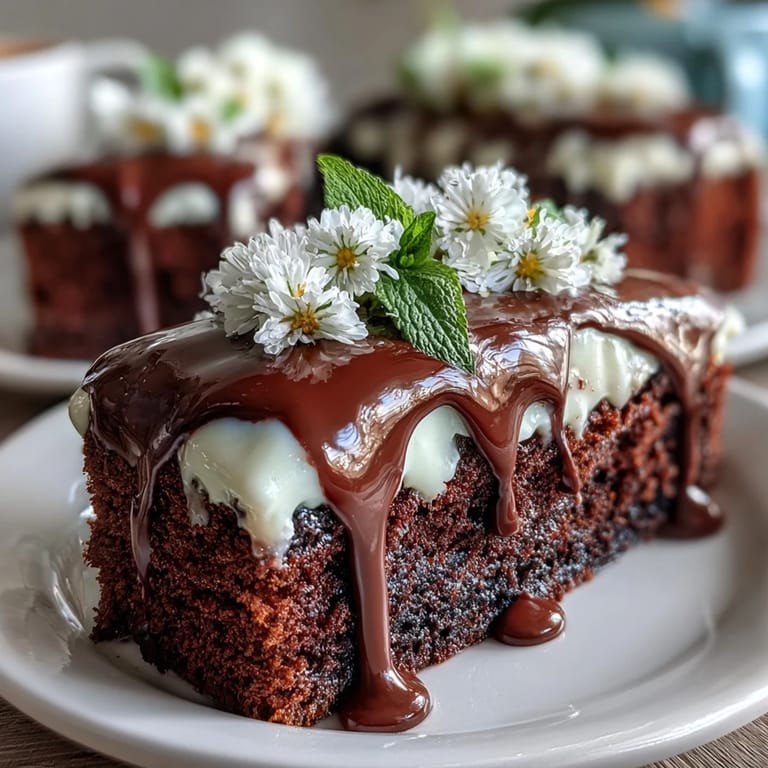
 What made me fall in love with this cake wasn't the first time I made it, but the third time, when my daughter asked if we could make it together for her friend who was going through a rough semester. Watching her carefully arrange the flowers on top, so focused and proud, reminded me that baking is as much about the people you're feeding as it is about technique. That cake became a conversation starter and a small gift of care, which is really what the best recipes do.
The Science of the Sponge
The vanilla sponge works because of the way air gets incorporated when you cream butter and sugar together—that's not just mixing, it's engineering. The air bubbles expand in the oven's heat, and the protein structure from the eggs holds everything together so it doesn't collapse. I used to think I was just making a cake, but now I realize I'm capturing steam and making it taste like a cloud. Understanding this changed how I approached cake baking in general; it made me more patient with each step and less likely to rush.
Mastering the Lemon Frosting Balance
The trick to a frosting that tastes bright but stays rich is the ratio of lemon to butter—too much lemon and it gets grainy and breaks, too little and you might as well be making vanilla frosting. I discovered this by accident when I got overzealous with fresh juice and had to start over, but that mistake taught me to add lemon slowly and taste as I go. The zest is where the actual flavor lives, so don't think juice alone will get you there; the oils in the zest are what make people say, wow, this is lemony.
Decorating and Presentation Magic
The white chocolate drip is the showstopper that makes this cake restaurant-quality, and the edible flowers are the final touch that makes people believe you're a professional baker. The flowers also solve a problem: they hide any imperfections in your frosting and add color and texture that make the cake impossible to ignore on a table. I've learned to add the flowers when the ganache is just slightly set but still tacky, so they stick without sliding around, and I always keep a backup frosting-filled piping bag in case I need to patch anything or add extra support underneath a heavier flower.
- Order your edible flowers from specialty grocers or reputable online sources at least a day before so they arrive fresh and you have time to inspect them.
- Pat the flowers gently with a soft paper towel to remove any moisture, which prevents them from looking sad or wilted on the finished cake.
- Assemble the final decorated cake as close to serving time as possible so the flowers look their most vibrant and the frosting stays firm.
 Pin it
 This cake has become my answer to the question, what should I bring when I want to impress? It looks like art, tastes like spring, and somehow manages to be approachable enough to actually make at home. Serve it with sparkling wine or Earl Grey tea and watch what happens.
Recipe FAQs
- → How do I make the vanilla sponge light and fluffy?
Beat butter and sugar thoroughly until light and fluffy before adding eggs one at a time. Alternate adding dry ingredients and milk gently to maintain airiness.
- → What is the best way to achieve a smooth lemon frosting?
Beat softened butter well, add sifted powdered sugar gradually, then mix in fresh lemon juice and zest with enough milk to reach a spreadable consistency.
- → How do I create the white chocolate drip without it melting the frosting?
Heat the cream just until simmering, pour over white chocolate, and stir until smooth. Allow ganache to cool slightly to thicken before dripping.
- → Can I use fresh flowers to decorate the cake safely?
Only use edible, pesticide-free flowers such as violets or pansies. Ensure flowers are safe for consumption before decorating.
- → How should I store the layered cake once assembled?
Refrigerate the cake for up to 3 days. Bring to room temperature before serving for the best texture and flavor.