 Pin it
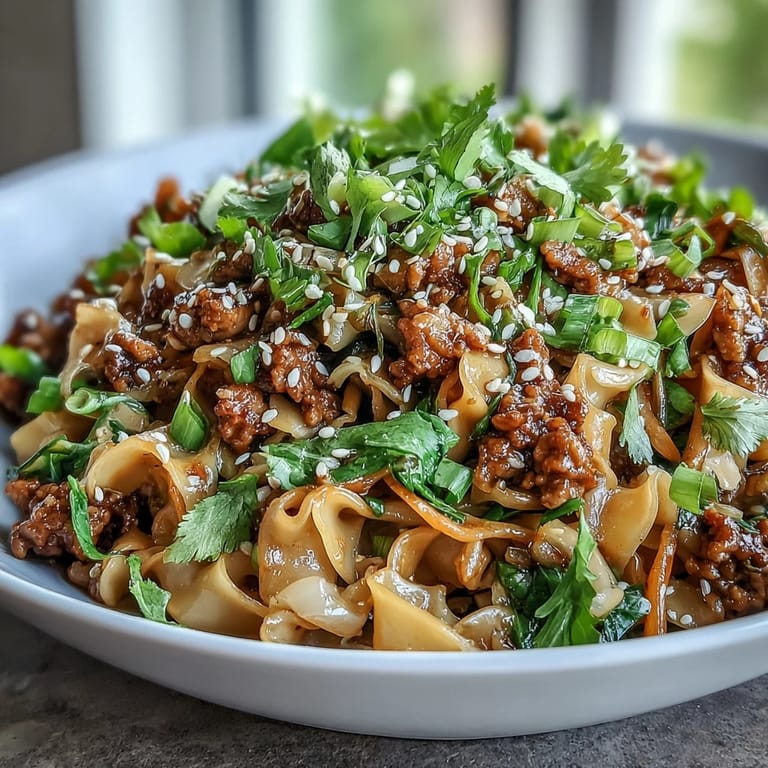
 A weeknight revelation happened while I was standing in my kitchen on a rainy Tuesday, craving something that tasted like those crispy potstickers my neighbor always brings to potlucks, but without the patience required to pleat dough. I started throwing noodles, browned meat, and all those delicious dumpling flavors into a bowl, and suddenly I had something even better—a warm, saucy comfort dish that comes together faster than the real thing. This became my go-to when I want maximum flavor with minimum fuss.
I made this for my partner one evening when he'd had a rough day, and watching him take that first bite and then immediately go back for another spoonful told me everything I needed to know. There's something about serving someone a warm, deeply flavored noodle bowl that feels like a small act of care—it's the kind of food that makes people put their phones down.
Ingredients
- Dried rice noodles or lo mein noodles (8 oz): Rice noodles stay tender without becoming mushy, but lo mein works beautifully too—pick whichever you can grab easily.
- Ground pork or chicken (1 lb): The pork carries more flavor and develops those crispy, browned edges that make each bite feel special, though chicken works if you prefer it.
- Soy sauce (1/3 cup plus 1 tbsp): Use low-sodium if you can find it, since the sauce concentrates as it simmers and you want room to taste everything.
- Toasted sesame oil (2 tsp plus 1 tsp): A little goes a long way—this is where the potsticker soul lives, so don't skip it or substitute with regular sesame oil.
- Rice vinegar (2 tbsp): The tangy backbone that keeps this from feeling heavy; it brightens all the savory notes.
- Oyster sauce (1 tbsp): Switch to hoisin if you want something sweeter, or use more soy sauce if you're avoiding shellfish.
- Chili-garlic sauce (1 tbsp): This brings the heat and a garlicky punch that ties everything together—taste as you go since heat levels vary by brand.
- Fresh ginger and garlic: Minced fresh is non-negotiable here; the warmth and aroma they release are half the magic.
- Green onions, shredded cabbage, carrots, and mushrooms: These vegetables stay crisp-tender when you stir-fry them properly, giving you texture contrast against the soft noodles and sauce.
- Cilantro and sesame seeds: The cilantro adds brightness at the end, and toasted sesame seeds give you a little crunch and nutty depth.
Tired of Takeout? 🥡
Get 10 meals you can make faster than delivery arrives. Seriously.
One email. No spam. Unsubscribe anytime.
Instructions
- Cook the noodles until barely tender:
- Bring a large pot of water to a boil and add your noodles, stirring gently so they don't clump. Most rice noodles soften in about 4 to 6 minutes—you want them just tender, not mushy, since they'll spend a few more minutes in the hot sauce. Drain, rinse briefly with cold water, toss with a few drops of oil, and set aside.
- Season the meat and let it rest:
- Whisk together soy sauce, sesame oil, cornstarch, white pepper, sugar, and salt in a small bowl until the sugar dissolves slightly. Pour this over your ground meat in a separate bowl and mix gently just until combined—the cornstarch will help everything bind together and stay moist as it cooks. If you're using napa cabbage, squeeze it very dry and fold it in now, then let everything sit while you prep the other ingredients.
- Make the sauce so it's ready to go:
- Combine soy sauce, rice vinegar, oyster sauce, chili-garlic sauce, sesame oil, brown sugar or honey, and broth in a bowl, whisking until the sugar dissolves completely. Taste it on a spoon and adjust—if it feels too salty, add a splash more broth; if it needs more depth, a tiny bit more sesame oil or oyster sauce helps. Set it aside.
- Prep your vegetables in advance:
- Shred your cabbage and carrots (or use pre-shredded if you're being practical), slice the mushrooms, and thinly slice your green onions keeping the white and green parts separate. Rinse and drain your bean sprouts if using them, and chop your cilantro roughly. Having everything ready means the actual cooking moves fast.
- Brown the meat until it has crispy edges:
- Heat 1 tablespoon of oil in a large nonstick skillet or wok over medium-high heat until it shimmers. Crumble your seasoned meat into the pan in an even layer and let it sit undisturbed for 2 to 3 minutes—this is how you get those browned, flavorful edges that feel almost like a potsticker crust. Break it up and continue cooking for another 3 to 4 minutes until it's golden and cooked through, then spoon off any excess fat if there's more than a teaspoon or two.
- Add your aromatics and let them bloom:
- Push the cooked meat to the side of the pan, add another tablespoon of oil to the empty space, then scatter in your minced garlic, ginger, and the white parts of the green onions. Stir for about 30 to 60 seconds—this is when your kitchen will smell incredible—then mix everything together with the meat.
- Stir-fry the vegetables until wilted but still crisp:
- Add the mushrooms first and let them soften for 2 to 3 minutes, then add your shredded cabbage and carrots. Stir and toss constantly for 3 to 4 minutes until the cabbage is starting to soften but still has a little snap to it. If the pan feels dry, add a splash of water so nothing sticks.
- Coat everything with sauce and let it glisten:
- Pour your prepared sauce over the meat and vegetables and toss everything well so the sauce coats every piece. Simmer for 1 to 2 minutes while the sauce thickens slightly and everything gets happy and cohesive.
- Toss in the noodles gently but thoroughly:
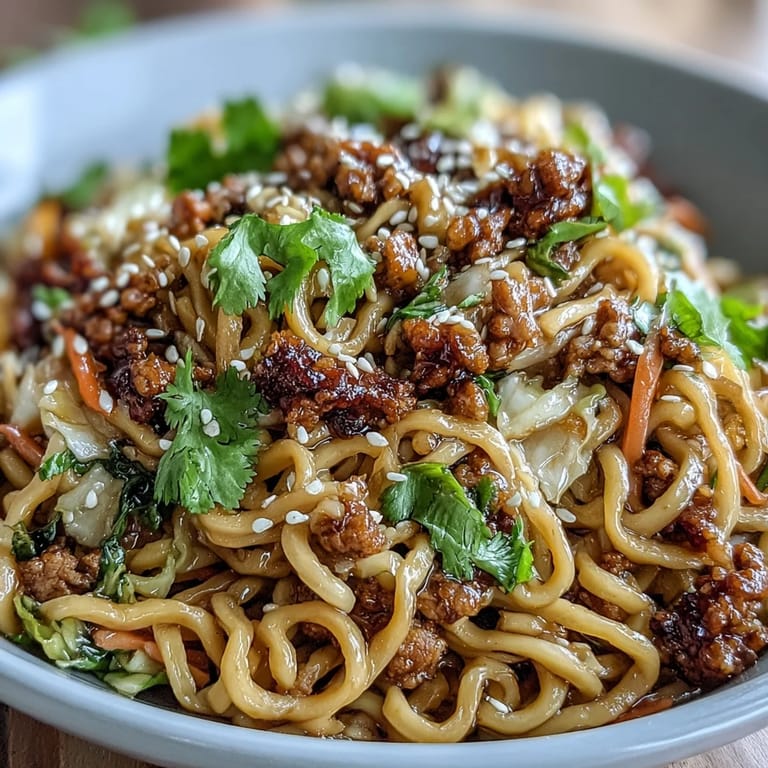
- Add your cooked noodles to the skillet and toss gently but thoroughly so every strand gets coated in that savory, tangy sauce. If it looks too dry, add 2 to 4 tablespoons of water or broth and toss again—you want it saucy but not soupy. Add your bean sprouts in the last minute of tossing if you're using them.
- Finish with brightness and serve right away:
- Taste everything and adjust with a squeeze of lime, a drizzle more chili-garlic sauce, or a splash more soy sauce if needed. Stir in half the green onion tops, turn off the heat, and divide into bowls. Shower each bowl with remaining green onions, cilantro, and toasted sesame seeds.
 Pin it
 There was a moment a few months ago when my young niece asked for thirds, and my sister laughed and said she'd never seen her eat vegetables so eagerly. It reminded me that good food isn't just about flavor—it's about watching people enjoy something you made with your hands and a little bit of care.
Why This Feels Like Potstickers in a Bowl
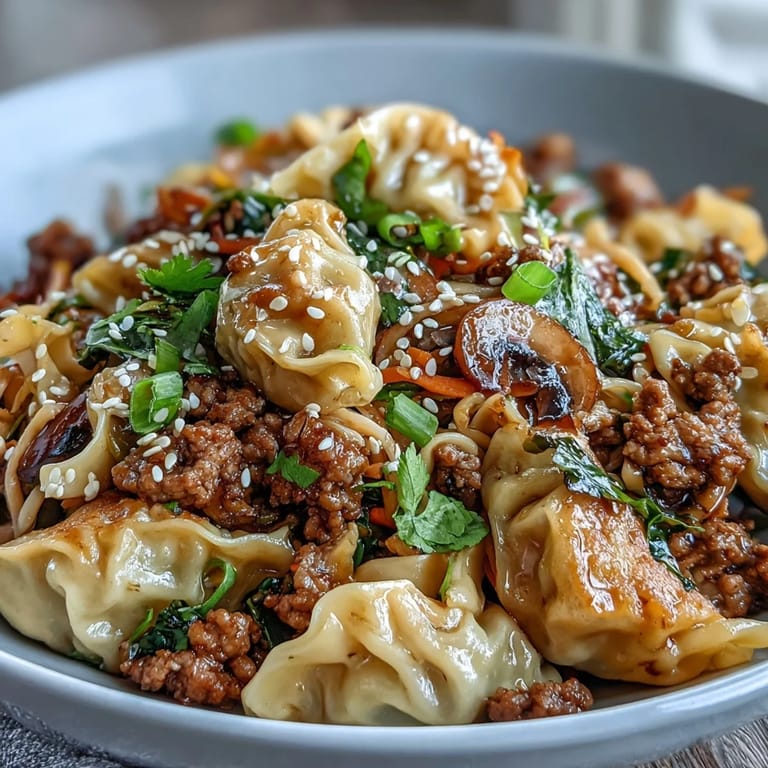
Potstickers have that magical combination of savory, tangy, rich, and a little bit of heat, all wrapped up in tender pockets. This bowl captures every single one of those flavors by building them into the sauce and the meat seasoning, then letting noodles and vegetables soak it all up. The crispy-edged meat plays the same role as the potsticker wrapper's browned bottom—that textural contrast that makes eating interesting.
How to Make This Your Own
The beauty of a noodle bowl is that it bends easily to what you have on hand or what you're craving. Swap the ground pork for turkey, beef, or even crumbled tofu if that's what makes sense in your kitchen. Play with the vegetables—baby bok choy, grated daikon, thinly sliced scallions, water chestnuts, or really anything that sounds good will work here.
Making It Work for Different Diets
This recipe is naturally dairy-free, which makes serving people with different dietary needs much less stressful. For gluten-free, use gluten-free tamari instead of soy sauce, make sure your oyster sauce is labeled gluten-free, and stick with rice noodles. If someone wants to add richness, a soft-boiled or fried egg on top becomes almost a restaurant-quality touch.
- A soft-boiled egg finishes the bowl with creamy richness and protein.
- Leftover bowls keep beautifully for 3 days in the fridge; reheat gently with a splash of water stirred in.
- Double the batch and freeze the meat and vegetable mixture separately from the noodles for an even faster future meal.
 Pin it
 This is the kind of weeknight dinner that feels special enough for guests but easy enough that you'll actually make it on a Tuesday. Once you've done it once, your hands know the rhythm and you'll find yourself craving it again.
Recipe FAQs
- → Can I make this dish gluten-free?
Yes, use rice noodles and substitute regular soy sauce with gluten-free tamari. Ensure your oyster sauce is certified gluten-free or use hoisin sauce as an alternative.
- → What protein alternatives work well?
Ground chicken, turkey, beef, or plant-based meat crumbles all substitute nicely for pork. Adjust cooking time slightly for leaner meats to prevent drying.
- → How can I add more vegetables?
Baby bok choy, sliced bell peppers, snap peas, or shredded kale complement the existing vegetables. Add heartier veggies like carrots and cabbage early, tender greens like spinach at the end.
- → Can I prepare components ahead?
The sauce can be made 2-3 days ahead and refrigerated. Vegetables may be prepped a day in advance. For best texture, cook the meat and noodles just before serving.
- → How do I store and reheat leftovers?
Store in airtight containers refrigerated for up to 3 days. Reheat with a splash of water or broth over medium heat, stirring occasionally to prevent sticking and redistribute the sauce.
- → What toppings add extra flavor?
Sliced scallions, extra cilantro, crushed peanuts, fried shallots, or a soft-boiled egg enhance the bowl. Lime wedges, chili oil, or extra sambal oelek let diners adjust brightness and heat.