 Pin it
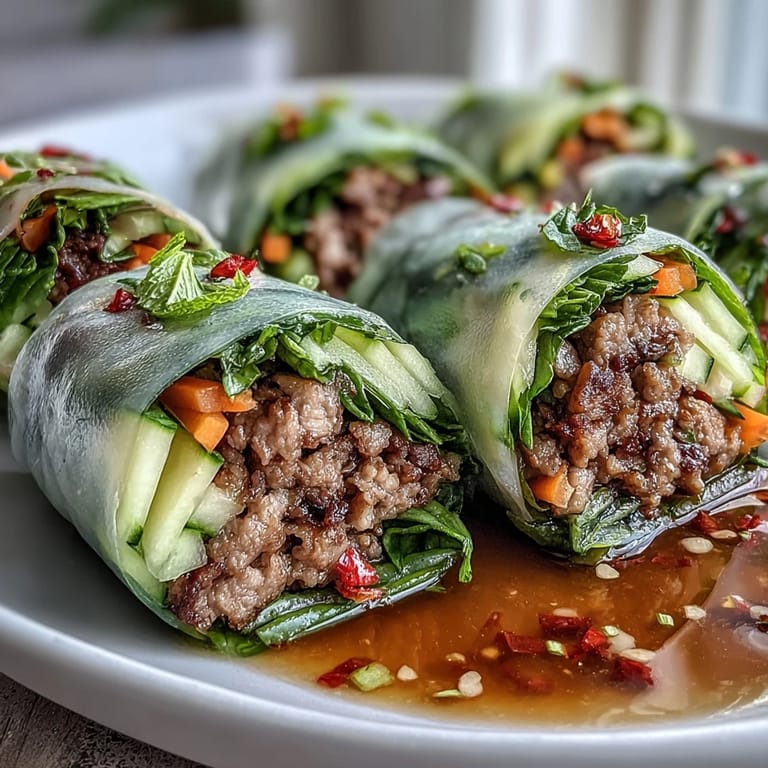
 I discovered these rolls by accident on a humid Bangkok afternoon when a street vendor's cart ran out of spring rolls and handed me one of these instead. The first bite—the way the warm basil hit against cool cucumber, how the beef tasted almost alive with garlic and chili—made me understand why she'd been sold out all morning. Now whenever I make them at home, that same electric feeling comes back, and I find myself making twice as many because nobody can eat just one.
My friend Marco watched me roll these for the first time and asked if I was building tiny sleeping bags. He was right—there's something meditative about the folding, the way your hands learn the motion after three or four rolls. By the time we'd finished the batch, he was standing beside me with his own wrapper, and we were laughing at his lopsided attempts while the dipping sauce cooled nearby.
Ingredients
- Ground beef (1 lb, 85–90% lean): The lean ratio prevents greasy filling and lets the spices shine; cheaper cuts tend to weep liquid and make the wrapper soggy.
- Neutral oil (1 tbsp): Canola, vegetable, or peanut work equally well; avoid olive oil, which mutes the Thai flavors.
- Garlic and shallot: Finely minced shallot adds a whisper of sweetness that balances the heat; don't skip this quiet flavor builder.
- Thai bird's eye chilies or red chili flakes (2 whole or 1–2 tsp): Fresh chilies deliver bright heat that dried flakes can't match, but flakes work if that's what you have on hand.
- Red bell pepper: The slight sweetness and tender texture add dimension; green peppers taste grassy by comparison.
- Green onions: Separate the white and green parts—the whites cook down and sweeten, the greens stay fresh and bright.
- Fresh Thai basil (1 cup chopped, plus 1 cup whole for rolling): This is non-negotiable; regular basil tastes entirely different and will disappoint you.
- Lime juice: Added at the end, it lifts the whole filling with acidity and prevents the roll from tasting heavy.
- Soy sauce, fish sauce, and oyster sauce: Together they build umami depth; leave any one out and the beef tastes incomplete.
- Brown or palm sugar: A touch of sweetness rounds out the saltiness and plays against the heat.
- Rice paper wrappers (12–16 large): Buy the thickest ones you find; thin wrappers tear and stick to your fingers.
- Cooked jasmine rice or rice vermicelli: Optional but traditional; they add substance and prevent the roll from feeling too vegetable-forward.
- Cucumber, carrots, lettuce, cilantro, mint: The fresher these are, the more alive your rolls taste; wilted produce makes the whole thing feel tired.
- Fish sauce, lime juice, sugar for dipping sauce: This is the soul of the dish—balance salty, sour, sweet, and spicy as if you're conducting a flavor orchestra.
Tired of Takeout? 🥡
Get 10 meals you can make faster than delivery arrives. Seriously.
One email. No spam. Unsubscribe anytime.
Instructions
- Make the sauce base:
- Whisk soy sauce, fish sauce, oyster sauce, dark soy sauce if using, and sugar in a small bowl until the sugar dissolves completely. The mixture should smell intensely savory and feel glossy on the spoon; add a tablespoon of water if it looks too thick.
- Build the aromatics:
- Heat oil in a large skillet over medium-high until it shimmers but doesn't smoke. Add minced garlic and shallot, stirring constantly for 30–45 seconds until golden and fragrant—you should smell the garlic before you taste it.
- Layer in heat and brightness:
- Scatter minced chilies and the white parts of sliced green onions into the pan, stirring for 20–30 seconds. The whole kitchen will smell alive and spicy now; don't rush past this moment.
- Brown the beef:
- Add ground beef, breaking it into small crumbles with the back of a spatula as it cooks for 4–6 minutes. You're looking for spots of caramelization, not gray, cooked-through meat—that browning brings richness.
- Soften the pepper:
- Add diced red bell pepper and cook for 2–3 minutes, stirring often. The pepper should soften just enough to taste tender but still hold its shape and bright color.
- Marry beef and sauce:
- Pour the prepared sauce over the beef and toss everything together, coating every piece. Cook for 2–3 minutes more, letting the sauce reduce and cling to the meat like a glossy coat.
- Finish with basil:
- Reduce heat to low and add the chopped Thai basil and green parts of the green onions, tossing gently for just 30–45 seconds until the basil wilts but doesn't disappear into the meat. Over-stirring turns basil gray.
- Cool and brighten:
- Remove from heat, stir in lime juice, and transfer the beef to a bowl to cool to room temperature. As it cools, the flavors meld and mellow slightly, becoming even more complex.
- Prep while cooling:
- Cook rice or noodles if using and spread on a plate to cool completely. Julienne your vegetables, tear or chop your herbs, and arrange everything in separate bowls so nothing slows you down during rolling.
- Build the dipping sauce:
- Combine fish sauce, lime juice, sugar, and warm water in a clean bowl, stirring until sugar dissolves. Add minced garlic, sliced chilies, shredded carrot, and cilantro or green onion stems to taste, then taste and adjust—you want it to be balanced between salty, sour, sweet, and spicy, with each flavor audible.
- Set up your rolling station:
- Fill a shallow dish or cake pan with warm (not hot) water. Lay out a clean board or large plate, optionally wiping it lightly with oil if you're worried about sticking.
- Soften rice paper:
- Working one at a time, dip a rice paper wrapper into warm water, rotating it so all edges get wet, for about 3–5 seconds. Lay it on your board; it will continue to soften and become pliable as you work.
- Layer your filling:
- On the bottom third of the wrapper, arrange about 2–3 tablespoons of cooled rice or noodles, then top with 2–3 tablespoons of the beef mixture. Add a few strips of cucumber and carrot, a small handful of lettuce, and a sprinkle of cilantro, basil, and mint—don't overfill or the roll will burst.
- Execute the fold:
- Fold the bottom edge of the wrapper up and over the filling, pressing gently. Fold in both sides, then roll tightly away from you like you're rolling a burrito, keeping tension on the wrapper so it stays snug.
- Rest and serve:
- Place each finished roll seam-side down on a plate. Once all rolls are complete, serve immediately with dipping sauce, or cover with a damp towel and plastic wrap and refrigerate for up to 2–3 hours. If chilled, let them come to room temperature for 10–15 minutes before serving so the wrapper softens back to silky.
 Pin it
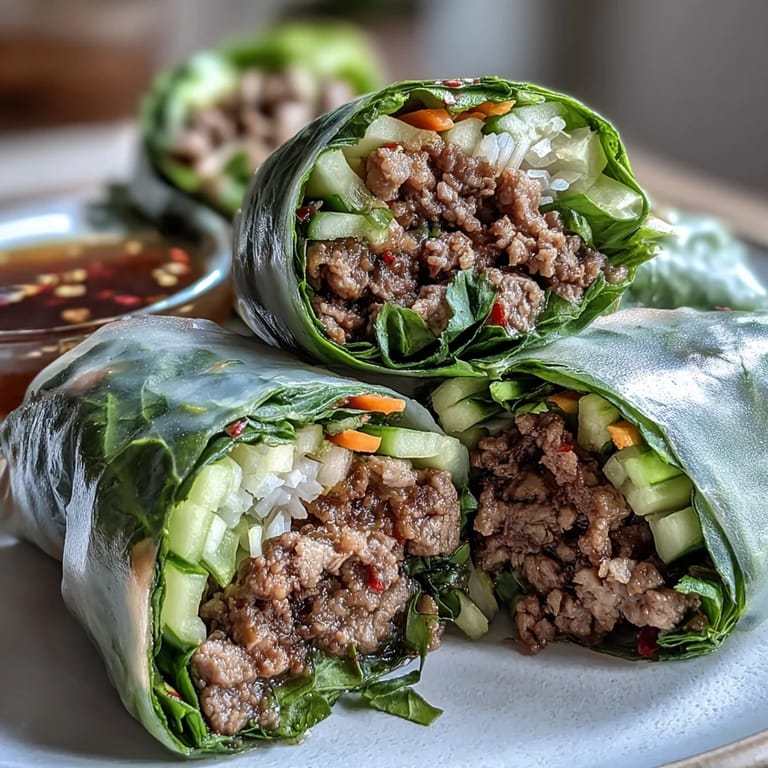
 I made these rolls for my mom's book club on a Tuesday evening, and three women who claimed they never ate rice paper rolls came back for thirds. One of them whispered that it was the lime juice that got her, how it made the whole thing feel bright instead of heavy. I realized then that these aren't just rolls—they're a vehicle for showing people something they thought they didn't like.
The Secret of Perfect Beef Texture
The beef stays tender and never becomes grainy because you're keeping the heat at medium-high and not over-stirring. Once the sauce hits the pan, the soy and oyster create a light glaze that keeps moisture in rather than letting it evaporate away. I've made versions with higher heat and constant stirring, and the beef turns out tough and stringy; these gentle, purposeful movements are what make the difference between okay filling and something people ask you to make again.
When Fresh Basil Isn't Available
If you truly can't find Thai basil, Italian basil mixed with extra mint comes surprisingly close. It won't taste identical—Thai basil has an anise-like undertone that's distinctive—but the herbaceous brightness will still be there. I've also used half regular basil and half cilantro in a pinch, and while different, it was still delicious; sometimes constraints force creativity.
Making These Rolls Your Own
Once you understand the structure, these rolls become a canvas for whatever you have in your kitchen. Ground turkey or chicken tastes lighter but equally good; adding crispy shallots on top brings crunch; skipping the rice saves carbs and lets the vegetables shine. The one thing I never skip is the dipping sauce—the rolls are good, but with the sauce, they become something worth remembering.
- Swap the beef for ground turkey, chicken, or even shrimp to keep things light and varied.
- Add shredded red cabbage, bean sprouts, or julienned radish for extra crunch and color.
- Make the dipping sauce ahead and chill it; the flavors meld and deepen as it sits.
 Pin it
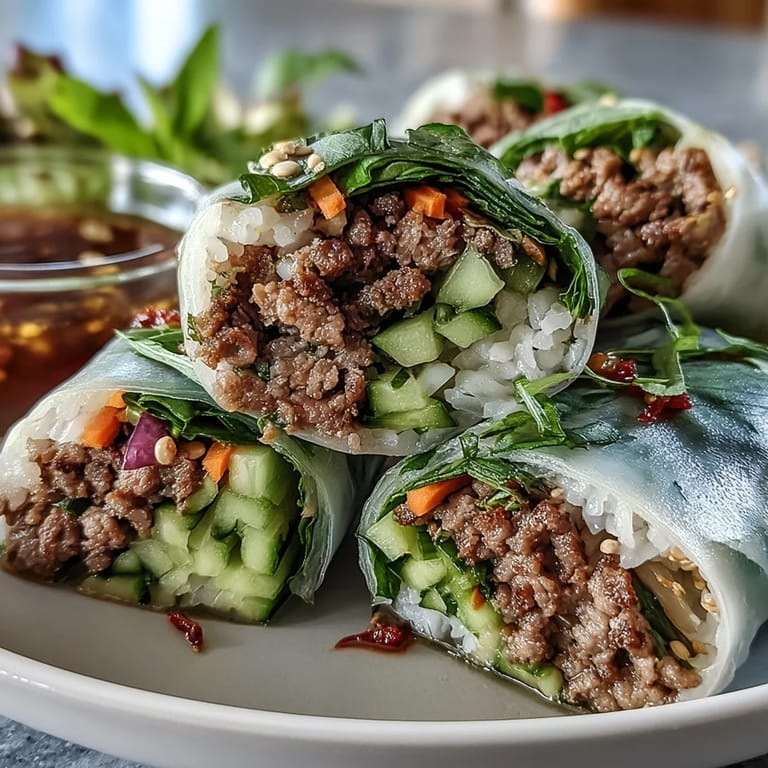
 These rolls have become my answer to the question of what to bring to a potluck or make when someone's visiting—they impress without demanding much of you once you've made them a few times. Every time I fold one, I feel a little closer to that Bangkok street vendor who showed me what fresh food could taste like.
Recipe FAQs
- → Can I make Thai basil beef rolls ahead of time?
Yes, you can prepare the beef filling up to 24 hours in advance and store it refrigerated. Assemble the rolls 2-3 hours before serving, covering with a damp towel and plastic wrap to prevent drying. Let them sit at room temperature for 10-15 minutes before serving for the best texture.
- → What can I substitute for Thai basil?
Italian basil combined with fresh mint makes a good substitute if Thai basil is unavailable. The mint provides some of the aromatic, anise-like notes that Thai basil contributes. You can also use holy basil for a more authentic flavor profile, though it has a stronger, peppery taste.
- → How do I prevent rice paper from tearing when rolling?
Use warm water rather than hot when softening the wrappers, and dip for only 3-5 seconds. The paper continues to soften as you work. Lightly oil your work surface with neutral oil spray to prevent sticking. Don't overfill the rolls—about 2-3 tablespoons of filling per wrapper is ideal. Roll firmly but gently, folding in the sides before completing the roll.
- → Can I make these gluten-free?
Absolutely. Use gluten-free soy sauce or tamari in place of regular soy sauce, and choose gluten-free oyster sauce. Most rice paper wrappers are naturally gluten-free, but always check the label. The remaining ingredients—beef, vegetables, herbs, and the dipping sauce components—are all naturally gluten-free with these simple substitutions.
- → What's the best way to store leftover rolls?
These rolls are best enjoyed fresh within 2-3 hours of assembly. If you must store them, wrap each roll individually in plastic wrap or place in an airtight container with layers of parchment paper. Refrigerate for up to 1 day, though the rice paper may become slightly tough. Bring to room temperature 15-20 minutes before eating to soften the wrapper.
- → Can I use a different protein instead of beef?
Ground turkey, chicken, or pork work well as alternatives to beef. Adjust cooking time slightly—poultry may need a minute or two less cooking time to prevent drying. For a vegetarian version, use crumbled firm tofu or tempeh, extending the cooking time slightly to achieve crispy edges and allow the sauce to absorb.