 Pin it
 Last summer, my neighbor threw together a sandwich board for a backyard gathering, and I watched as people actually lingered around the kitchen table instead of disappearing into corners with their plates. There was something magical about letting everyone build exactly what they wanted, no apologizing for dietary preferences or picky tastes. That's when I realized this wasn't just about feeding people—it was about creating a moment where the food becomes the conversation starter.
I made this for a surprise picnic my sister planned, and honestly, the best part wasn't the food—it was seeing my brother-in-law, who's usually skeptical about anything homemade, actually get excited about loading up his sandwich with three types of mustard and pickles. He even asked for the recipe, which, if you know him, is practically a standing ovation.
Ingredients
- Ciabatta rolls: Their airy crumb holds up to wet ingredients without getting soggy, and they're sturdy enough for stacking.
- Whole grain sandwich rolls: These add a nuttier flavor and appeal to people who want something heartier than white bread.
- Sourdough bread: The tang cuts through rich meats and cheeses beautifully, and it slices cleanly without crumbling.
- Smoked turkey breast: Lean but flavorful, it's usually the first thing to disappear because it satisfies both the health-conscious and the hungry.
- Honey ham: Sweet undertones balance salty roast beef, and it layers without tearing if you handle it gently.
- Roast beef: Go for thicker slices from a good deli counter—they won't fall apart and they impress people.
- Salami: A little goes a long way flavor-wise, so don't shy away from this one for those who want serious richness.
- Swiss, cheddar, and provolone cheeses: Each one brings different things: Swiss has holes that let flavors blend, cheddar adds sharpness, and provolone brings a subtle sweetness.
- Tomatoes and cucumbers: Slice just before serving so they stay crisp and don't weep all over the board.
- Red onion: Thin slices mean people can use as much or as little bite as they want.
- Romaine lettuce: Heartier than most lettuces, it won't wilt under the weight of meats and dressing.
- Baby spinach: A sneaky green that tastes less aggressive than larger varieties and adds color.
- Avocado: Slice it right before guests arrive, or toss lightly in lemon juice to prevent browning.
- Dill pickle slices: The brine adds acidity and funk that prevents the whole board from feeling too heavy.
- Mayonnaise and Dijon mustard: These are the anchors—people expect them, and for good reason.
- Hummus: For the person who wants something creamy without mayo, or just enjoys the earthy sesame notes.
- Pesto: A game-changer for anyone tired of the same old spreads, and it transforms a simple sandwich into something memorable.
- Honey mustard: The sweet-sharp balance appeals to people who find straight mustard too intense.
- Black olives and banana peppers: These are the little surprises that make someone's sandwich suddenly feel more sophisticated.
- Sun-dried tomatoes: Concentrated flavor and chewy texture add depth that fresh tomatoes alone can't quite achieve.
Tired of Takeout? 🥡
Get 10 meals you can make faster than delivery arrives. Seriously.
One email. No spam. Unsubscribe anytime.
Instructions
- Prepare your stage:
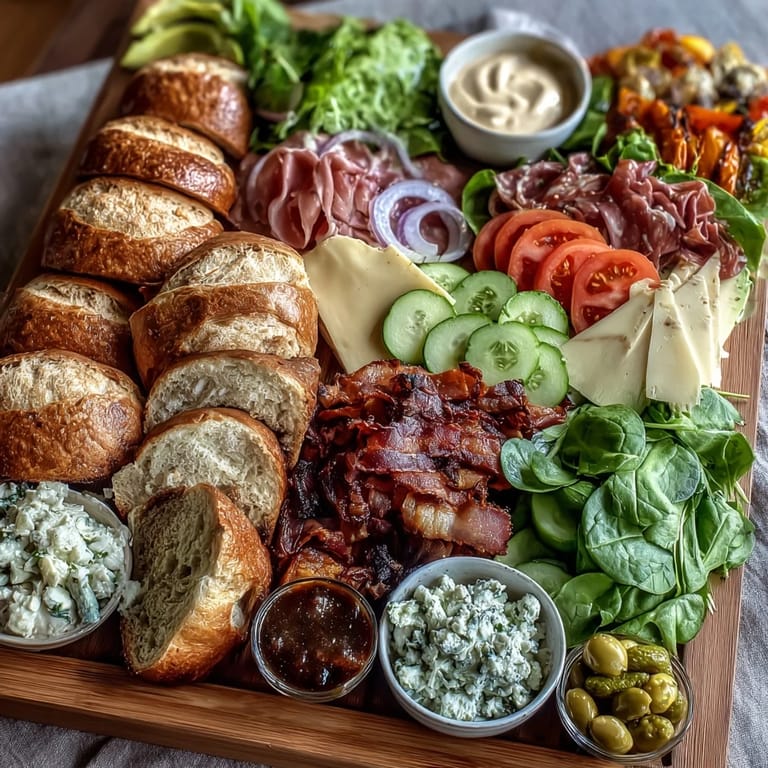
- Find your largest board or platter—you want enough space that nothing feels crowded or like people are reaching over each other. I use a wooden cutting board that's been in my family for years, but honestly, a clean sheet pan works just as well if you're being real about it.
- Bread first:
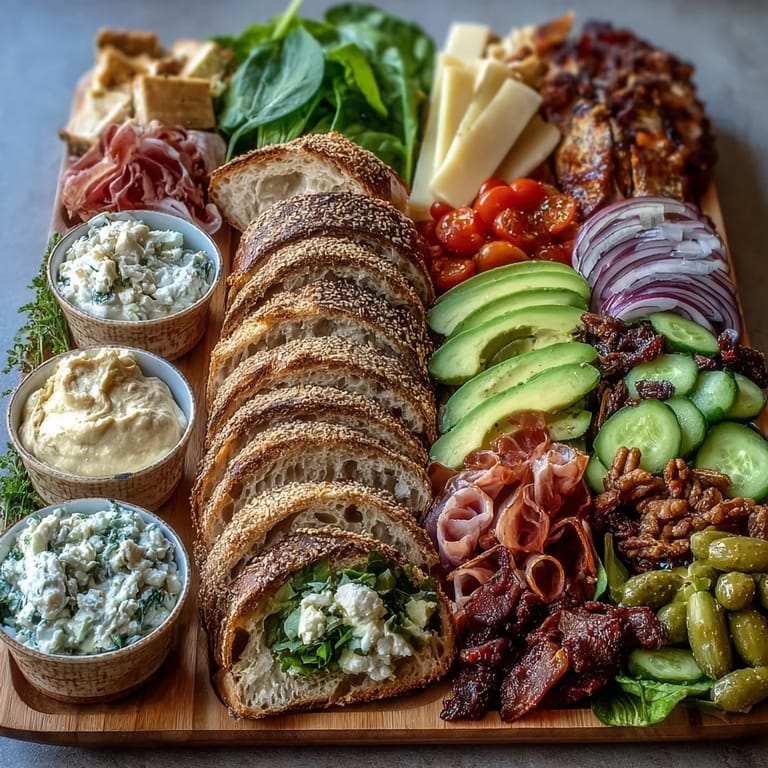
- Arrange all the bread varieties in one section, standing them up slightly so people can actually grab them without causing a domino effect. If your bread has been sitting out, the ciabatta especially will be easier to handle if it's been sitting at room temperature.
- Organize meats and cheese by type:
- Keep each deli meat separate so flavors don't bleed together and people can see exactly what they're choosing. Overlap the slices slightly so they look abundant without actually using twice as much as you need.
- Arrange vegetables strategically:
- Tomatoes and cucumbers go in shallow bowls or directly on the board, but keep the softer stuff like avocado and spinach in bowls to prevent bruising. The board should look like a garden exploded on it, in the best way possible.
- Spreads in small vessels:
- Use small bowls or ramekins so people can dip without contaminating the whole batch, and always include a clean spoon or butter knife with each one. I learned this the hard way when mayonnaise mustard got mixed in a shared container and nobody was happy about it.
- Bring it all together:
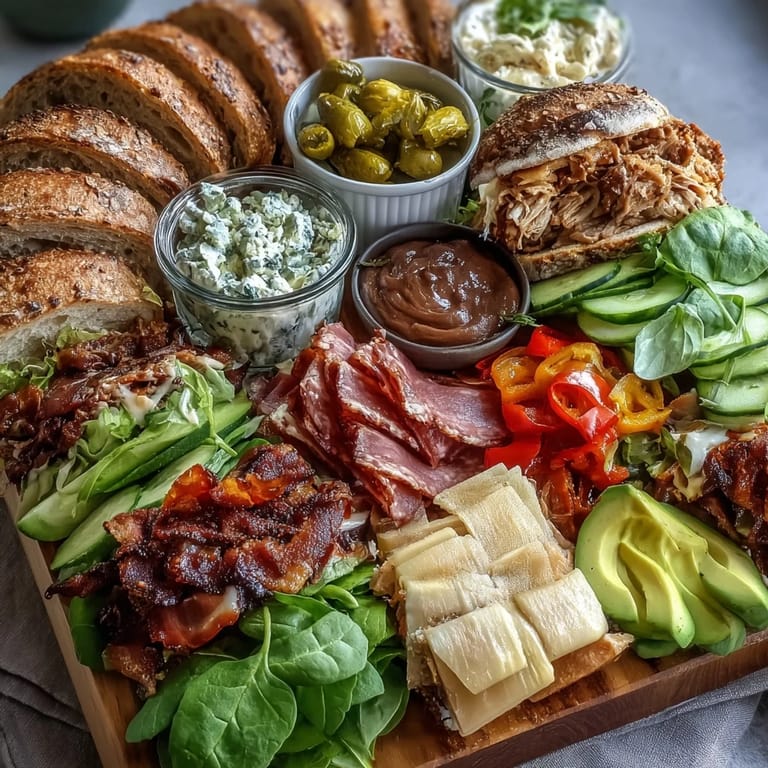
- Step back and make sure there's a logical flow—no one should have to do a deep reach to grab bread or the pickles. If you're not sure, you've probably got it right.
- The final touch:
- Cover with plastic wrap if you're making this ahead, but don't refrigerate unless you absolutely have to—cold bread is sad bread. Transport in a cooler if you're heading somewhere, keeping the spreads and soft items separate until the last moment.
 Pin it
 What really made me understand the power of this board was watching my dad, who usually just eats whatever's put in front of him, actually sit down and think about what combination he wanted. He tried four different sandwiches over the course of the afternoon, and for the first time in years, food became play rather than just fuel. That's the magic of letting people choose.
Building the Perfect Bite
The architecture of a sandwich matters more than most people think. Start with your bread, then spread, then a thin layer of something acidic like mustard or pickle juice to create a barrier that keeps moisture from seeping into the bread itself. Layer your proteins next, then cheese (it'll soften against the warm meat), then vegetables, then any extra spreads. The weight distribution actually matters—heavier items in the middle prevent bread from tearing at the edges.
Timing and Transport
If you're making this at home and serving immediately, you can be a little more relaxed about prep timing. But if you're driving somewhere, assemble the board within two hours of departure, keep everything as cool as possible in a proper cooler, and don't stack anything on top of it. The one time I stacked a bag of chips on the corner of my board, the weight shifted everything and I spent the first ten minutes of the picnic reorganizing like some kind of culinary disaster.
Making It Your Own
This board is truly a blank canvas, and I've seen people transform it based on what they had on hand or what their guests actually wanted. One friend added grilled chicken because half her group was avoiding red meat, another switched out pesto for basil mayonnaise, and someone else went completely wild with caramelized onions and fig jam. The skeleton stays the same, but the personality changes every time.
- Vegetarian guests love having hummus, avocado, roasted vegetables, and all the spreads in the spotlight instead of feeling like an afterthought.
- Keep any perishables in a cooler with an ice pack, especially if you're prepping more than a couple hours ahead.
- Leftover meats, cheeses, and vegetables all keep for a few days, so you're not really wasting anything if people don't use everything.
 Pin it
 This sandwich board has somehow become the thing I make when I want to gather people without the stress of cooking, and it's become the thing people ask me to bring to gatherings. It's less about being a chef and more about creating space for everyone to feel a little bit like one.
Recipe FAQs
- → What breads work best for a deli sandwich board?
Ciabatta rolls, whole grain sandwich rolls, and sourdough slices offer a sturdy and flavorful base for layering deli meats and toppings.
- → How can I keep the ingredients fresh for a picnic?
Store deli meats, cheeses, and vegetables separately in airtight containers and keep chilled until ready to serve or assemble.
- → What spreads complement a deli sandwich board?
Mayonnaise, Dijon mustard, hummus, pesto, and honey mustard add varied flavors and moisture to the sandwiches.
- → Can I offer vegetarian options on the board?
Yes, include grilled vegetables, sliced hard-boiled eggs, or plant-based deli slices to accommodate vegetarian preferences.
- → How should I arrange the board for easy serving?
Place breads, deli meats, cheeses, vegetables, spreads, and extras in separate sections or small bowls for convenient access and customization.