 Pin it
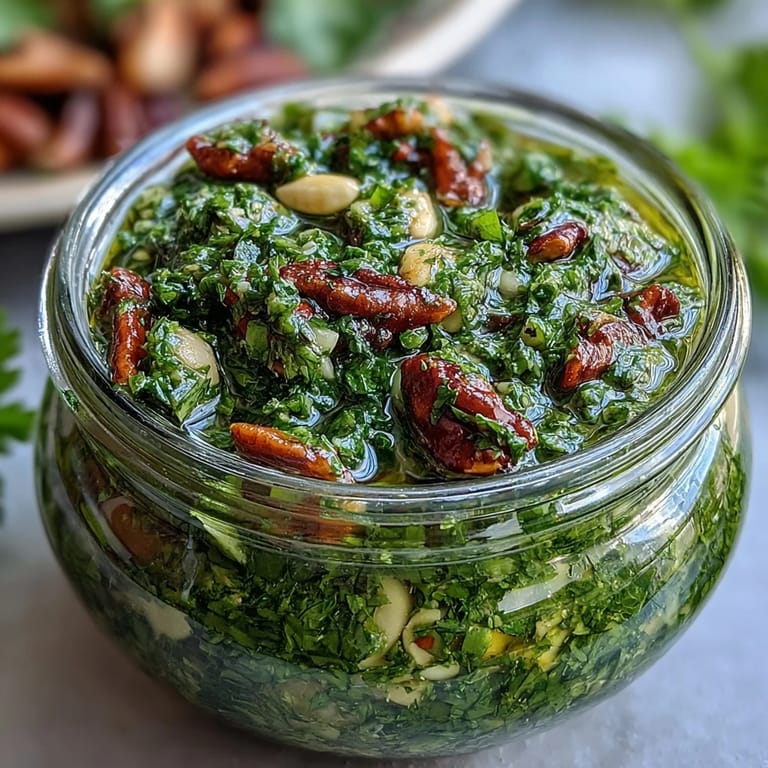
 My neighbor handed me a bunch of dandelion greens from her yard one spring morning, insisting they were too good to waste on salad alone. I'd never thought of them as anything but weeds, but watching her describe how she made pesto from them sparked something in me. That afternoon, I toasted pine nuts in a skillet and caught their warm, buttery aroma drifting through the kitchen, and suddenly I understood what she meant. The bitterness of the greens balanced against the richness of garlic and olive oil created something unexpectedly elegant, a condiment that tasted like the earth had been polished up and poured into a jar.
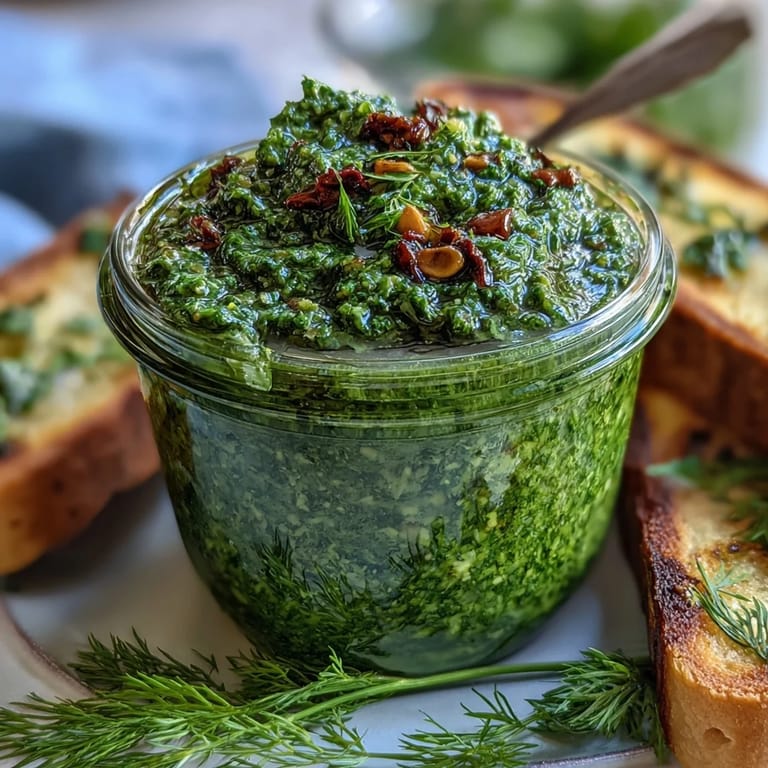
I made this for a potluck once, spread thick on crostini, and watched people's faces shift from curiosity to genuine delight. Someone asked if it was an accident or intentional that it tasted almost Mediterranean but with an edge to it, and I realized that's exactly what makes it special. It became the thing people asked me to bring back, the homemade condiment that somehow felt more impressive than it deserved to be.
Ingredients
- Fresh dandelion greens: The backbone of this pesto, slightly bitter and incredibly nutritious; look for tender young leaves before the plant flowers, or blanch tougher ones briefly in hot water to soften the edge.
- Fresh basil leaves: Optional but gentle, these dial down the intensity if you're new to dandelion and want a smoother introduction.
- Pine nuts: Toasted until golden, they bring a creamy richness that prevents the pesto from tasting one-dimensional; walnuts or almonds work too but shift the flavor considerably.
- Freshly grated Parmesan cheese: Sharp and salty, it anchors all the green brightness; pre-shredded versions often contain anti-caking agents that muddy the texture.
- Garlic cloves: Raw and bold, just two cloves is enough to be heard without overpowering everything else.
- Extra-virgin olive oil: Don't skimp here, as the oil carries the flavor and creates that silky texture you're after.
- Lemon juice: The acid that makes everything taste alive and keeps the pesto bright even after a few days in the fridge.
- Kosher salt and black pepper: Taste as you go, since every batch of greens has its own personality.
Tired of Takeout? 🥡
Get 10 meals you can make faster than delivery arrives. Seriously.
One email. No spam. Unsubscribe anytime.
Instructions
- Toast the pine nuts until they announce themselves:
- Heat a dry skillet over medium and add the pine nuts, stirring constantly for two to three minutes until they turn golden and smell like toasted butter. Pour them onto a plate immediately so they don't keep cooking and turn bitter.
- Build the foundation in your food processor:
- Add the dandelion greens, basil if you're using it, peeled garlic, cooled pine nuts, and grated Parmesan. Pulse until everything is finely chopped and looks like wet sand.
- Stream in the olive oil while the processor runs:
- This is the step that transforms the mixture from chunky to silky; add the oil slowly so it emulsifies properly, and scrape down the sides occasionally to make sure nothing hides from the blade. Add the lemon juice at the same time.
- Season and taste with intention:
- A half teaspoon of salt and a quarter teaspoon of pepper is a starting point, not a destination. Pulse to combine, then taste on a spoon or cracker.
- Transfer and store with care:
- Move the pesto to a clean jar, press plastic wrap directly onto the surface to prevent oxidation, and it'll keep for a week in the fridge, maybe longer if you're lucky.
 Pin it
 There's something almost tender about making pesto from weeds, about turning something the lawn service would spray with chemicals into something worth preserving in a jar. When my sister tasted it for the first time, she closed her eyes and said it tasted like spring with an attitude, and somehow that felt like the highest compliment.
When to Reach for Dandelion Pesto
Toss it with warm pasta, especially something simple like fresh egg noodles or pappardelle, and let it coat everything with its earthy sophistication. Spread it on toast with a soft cheese and a crack of pepper for a quick lunch that feels intentional. Dollop it onto roasted vegetables, particularly potatoes or carrots, where its slight bitterness cuts through the sweetness of caramelization.
The Versatility That Surprised Me
I started using this as a dip with raw vegetables and never looked back, the bitterness of the greens making everything taste sharper and more alive. It also works as a finishing sauce for soups, swirled into vegetable soups or squash purees where it adds depth without heaviness. Someone once suggested mixing it with Greek yogurt to create a spread, and now that's become my go-to move for sandwiches and grain bowls.
Making It Your Own
The beauty of pesto is that it responds to what you have and what you love, so don't feel locked into tradition. Swap the pine nuts for toasted walnuts if that's what's in your pantry, or use half basil and half dandelion if you're easing into the flavor. For a vegan version, nutritional yeast delivers a savory, umami-forward depth that mimics Parmesan without the dairy.
- If dandelion greens are hard to find or out of season, bitter chicory or radicchio leaves create a similar edge.
- Make a double batch and freeze it in ice cube trays for quick flavor boosts throughout the month.
- Store with a thin layer of olive oil on top to slow oxidation and keep it vibrant longer.
 Pin it
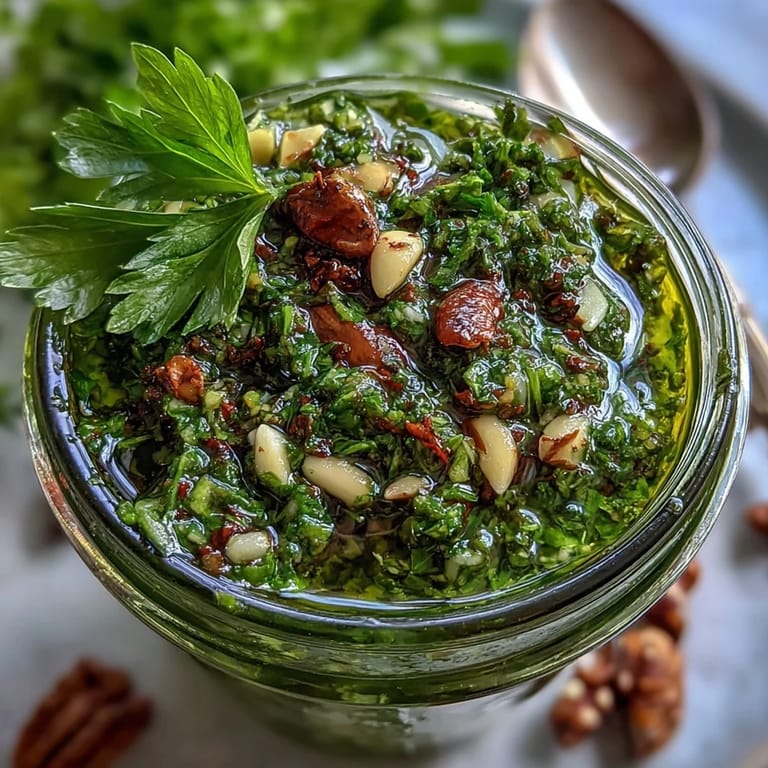
 This pesto reminds me that the best recipes often come from paying attention to what's growing around you and what people who know better are willing to share. Make it once, and you'll start spotting dandelion greens everywhere, suddenly seeing lunch and dinner where you once saw only yard work.
Recipe FAQs
- → Can other nuts replace pine nuts?
Yes, toasted walnuts or almonds make excellent substitutes, providing a different but complementary nutty flavor.
- → How can I reduce bitterness in dandelion greens?
Blanch the greens briefly in boiling water, then drain and cool to mellow their natural bitterness.
- → What dishes pair best with this blend?
It works wonderfully tossed with pasta, spread on toasted bread, or drizzled over roasted vegetables.
- → Is basil necessary in the mix?
Basil is optional and softens the overall flavor, but the blend works well without it for a bolder taste.
- → How long can this condiment be stored?
Store covered in the refrigerator for up to one week to maintain freshness and flavor.
- → Are there vegan alternatives included?
Yes, omitting cheese or using nutritional yeast offers a vegan-friendly version with similar texture and taste.