 Pin it
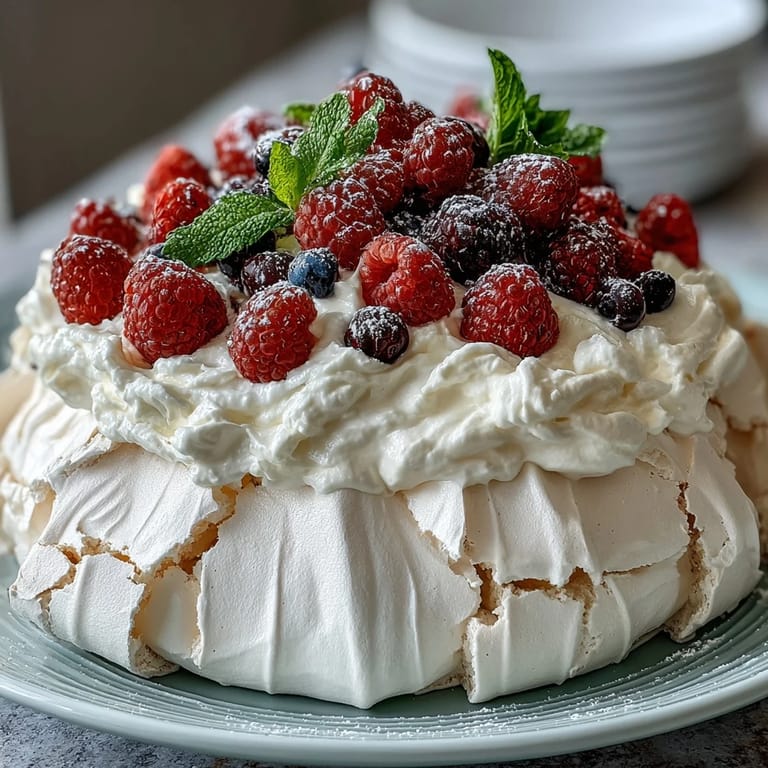
 My mother once said that the best desserts aren't the ones that take the longest, but the ones that make people pause mid-conversation when they see them. That's exactly what happened the first time I mastered pavlova—this ethereal, cloud-like creation that somehow tastes like air and comfort all at once. There's something almost magical about watching egg whites transform into glossy peaks, then baking into a crispy shell that shatters between your teeth. I've made this for countless celebrations since, but it's the Mother's Day version, crowned with fresh berries and cream, that always feels special. It's showstopping without being fussy, which is exactly the energy we should bring to honoring the people we love.
I'll never forget my aunt's face when she bit into her first bite—she'd been skeptical about the whole thing, convinced something so delicate couldn't possibly taste good. But that combination of textures, the sweetness tempered by tart berries, the way the whipped cream melted into the cracks of the meringue—it converted her instantly. Now she requests it every year, and I love having a dessert that feels elegant enough for fancy occasions but fun enough that even skeptics become believers.
Ingredients
- Egg whites (4 large, room temperature): Room temperature eggs whip to greater volume because the proteins are more flexible—cold eggs beat reluctantly and never achieve that stiff, glossy perfection.
- Superfine sugar (1 cup/200 g): The finer texture dissolves completely into the meringue, creating that signature glossy finish; regular sugar leaves grainy pockets that disappoint.
- Cornstarch (1 tsp): This tiny addition stabilizes the meringue's structure and helps create that marshmallowy interior that makes pavlova so addictive.
- White vinegar (1 tsp): The acidity strengthens the egg whites' foam and adds just enough stability to prevent weeping.
- Vanilla extract (1 tsp pure): Use pure vanilla, never imitation—the flavor difference is noticeable in something this delicate.
- Salt (pinch): A tiny bit enhances everything without tasting salty.
- Heavy whipping cream (1 cup/240 ml, chilled): Cold cream whips faster and holds peaks longer; warm cream becomes grainy.
- Powdered sugar (2 tbsp for cream, 1 tbsp for dusting): Dissolves instantly into cream without the grittiness of granulated sugar.
- Mixed berries (strawberries, raspberries, blueberries, blackberries—4 cups total): A mix of colors and flavors keeps things interesting, and you can swap for whatever's in season.
- Fresh mint (optional but recommended): A few leaves add a fresh note that cuts through the sweetness beautifully.
Tired of Takeout? 🥡
Get 10 meals you can make faster than delivery arrives. Seriously.
One email. No spam. Unsubscribe anytime.
Instructions
- Prepare your canvas:
- Preheat the oven to 250°F (120°C) and line a baking sheet with parchment paper, tracing a 9-inch circle as your guide. This low temperature is essential—it allows the meringue to dry out rather than brown, keeping that pristine white exterior.
- Whip the egg whites to glossy perfection:
- In a completely clean, dry bowl (any grease or yolk will sabotage you), beat the egg whites with a pinch of salt until soft peaks form—this takes about 2 minutes with an electric mixer. The whites should transform from frothy to cloud-like, holding their shape but still looking slightly wet at the tips.
- Build your meringue carefully:
- Gradually add the superfine sugar, one tablespoon at a time, beating continuously for about 5-6 minutes total. This slow addition is crucial because it allows the sugar to dissolve completely; rush it and you'll end up with a gritty meringue that doesn't have that signature glossy sheen.
- Fold in the secret stabilizers:
- Gently fold in the cornstarch, vinegar, and vanilla extract with a spatula, using as few strokes as possible to keep all that air intact. The mixture should still feel airy and voluminous, not deflated.
- Shape your nest:
- Spoon the meringue onto the prepared parchment within your traced circle, creating a shallow nest shape with slightly higher edges. You want the center a bit lower so the cream and berries will nestle in naturally.
- Bake low and slow:
- Bake for 1 hour 15 minutes—you'll notice the pavlova gradually firming up and turning pale cream-colored rather than white. Turn off the oven and leave the door slightly ajar, letting it cool completely inside (about 30 minutes to an hour) to prevent cracking.
- Whip the cream while you wait:
- Once the pavlova has been baking for about 45 minutes, chill your mixing bowl and beaters, then whip the heavy cream with powdered sugar and vanilla until soft peaks form. Be careful not to overbeat or you'll end up with borderline butter.
- Assemble with care:
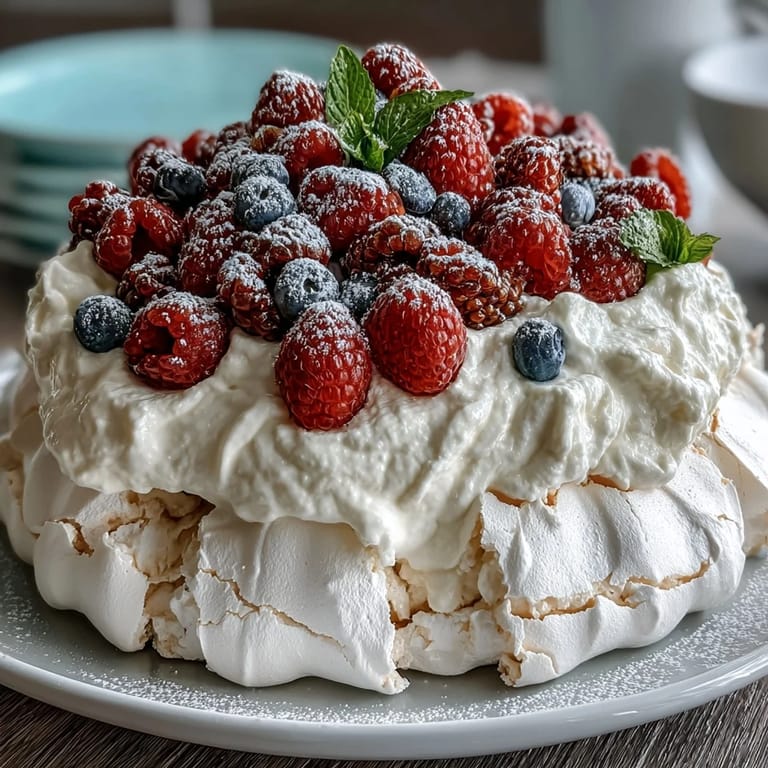
- Once everything is completely cool, transfer the pavlova to your serving platter, spread the whipped cream generously across the top, and scatter the mixed berries in whatever pattern feels celebratory to you. A light dusting of powdered sugar and a few mint leaves add that finishing-touch elegance.
 Pin it
 There's something deeply generous about bringing pavlova to a table—it signals care, intention, and the belief that someone deserves something extraordinary. I've watched this dessert turn ordinary evenings into celebrations and turn casual dinner guests into people who ask for the recipe.
Timing and Make-Ahead Strategy
The beautiful secret of pavlova is that you can bake the meringue shell up to two days ahead, storing it in an airtight container in a cool, dry place—not the refrigerator, which introduces moisture. Whip your cream and assemble just a few hours before serving so everything stays fresh and the meringue maintains its crispy texture.
Berry Selection and Seasonal Swaps
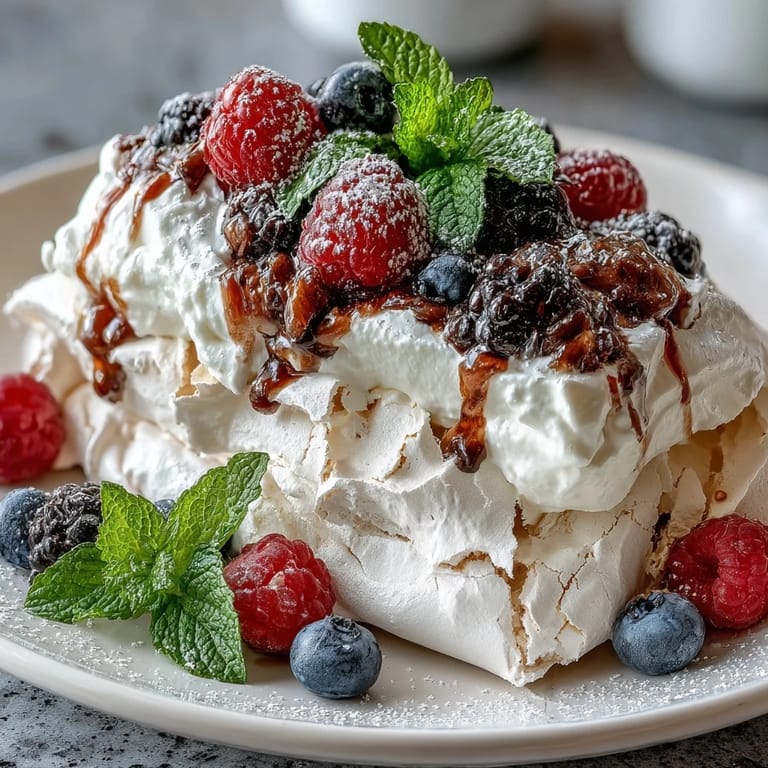
While mixed berries are traditional and stunning, I've had tremendous success substituting with kiwi slices, fresh peach wedges, or even passionfruit pulp drizzled on top. The key is choosing fruits that won't weep too much juice into your cream—avoid canned fruit or anything overly wet.
Troubleshooting and Creative Twists
If you love chocolate, fold 2 tablespoons of sifted cocoa powder into your meringue before baking for a mocha-inspired version. For a tropical twist, try coconut cream instead of whipped cream, topped with pineapple and macadamia nuts.
- If your pavlova is browning too quickly, lower your oven temperature by 25°F and add 10-15 minutes to the bake time.
- Make sure your mixer bowl and beaters are absolutely grease-free—even a trace of oil will prevent your egg whites from reaching full volume.
- Assemble pavlova no more than 3-4 hours before serving, or the cream will start softening the meringue.
 Pin it
 Pavlova is proof that some of the most impressive desserts are actually the simplest to understand—it's about respecting a few basic rules and then letting the oven work its magic. Serve this to someone you love and watch their face light up.
Recipe FAQs
- → How do I achieve a crisp pavlova shell?
Beat the egg whites until stiff peaks form and bake at a low temperature for over an hour. Proper cooling inside the oven helps maintain the crisp exterior.
- → Can I use other fruits instead of mixed berries?
Yes, seasonal fruits like kiwi, peaches, or passionfruit make excellent alternatives and add unique flavors.
- → What is the role of cornstarch and vinegar in the meringue?
Cornstarch adds stability and softness to the center, while vinegar helps the meringue maintain structure and prevents weeping.
- → How should the whipped cream be prepared for topping?
Chill the heavy cream and beat it with powdered sugar and vanilla until soft peaks form for a light, fluffy texture.
- → How can I add a chocolate twist to the pavlova?
Fold in sifted cocoa powder into the meringue mixture before baking to introduce subtle chocolate flavor.