 Pin it
 The first time I made clam chowder from scratch, I stood at the fishmonger's counter with absolutely no idea what I was doing. The vendor handed me a bag of live clams and said, "Just steam them until they open," as if I'd done this a hundred times. That first pot bubbling away on my stove, the ocean-like smell filling my kitchen, the moment I lifted the lid and saw those shells gape open—it felt like I'd unlocked something magical. Now, whenever I make it, that same sense of discovery comes back, though these days I'm usually making it because someone I care about needs comfort in a bowl.
I remember spooning this into bowls for my neighbor on a day she'd been crying in her driveway. She didn't want to talk about it, but the way she closed her eyes after that first spoonful told me everything. That's when clam chowder stopped being just a recipe for me and became a small act of showing up for someone.
Ingredients
- Fresh clams (900g/2 lbs) or canned clams (500g), drained: Fresh clams are worth the effort if you can find them—they give you that liquid gold to work with, though honestly, good canned clams won't let you down on a busy night.
- Potatoes (2 medium), diced: Waxy potatoes like Yukon golds hold their shape better than russets, but use what you have; they'll soften into creamy bites either way.
- Onion (1 medium), finely chopped: This is your foundation—don't skip sautéing it until it's truly soft and sweet, which takes longer than you'd think.
- Celery (2 stalks), finely chopped: It hides in the background but adds an earthy, subtle depth that people taste without realizing it.
- Carrot (1 medium), diced (optional): A little sweetness balances the briny clams, and the color makes the soup feel less monochromatic.
- Heavy cream (240ml/1 cup) and whole milk (240ml/1 cup): The cream does the heavy lifting in terms of richness, but milk keeps it from feeling like you're eating butter; together they're perfect.
- Unsalted butter (60g/4 tbsp): Use real butter here—it's what gives the roux its subtle, toasty flavor.
- Clam juice (500ml/2 cups): If you're using fresh clams, you'll make your own; bottled clam juice is reliable, so don't feel bad about reaching for it.
- Water (240ml/1 cup): Just water, nothing fancy needed to dilute and balance the brininess.
- Garlic (2 cloves), minced: Don't let it brown when you add it, or it'll turn bitter and aggressive instead of sweet.
- All-purpose flour (2 tbsp): This thickens the chowder into something luxurious without needing cornstarch or cream cheese tricks.
- Bay leaf, dried thyme, black pepper, salt: Bay leaf is non-negotiable for that subtle herbal note that makes people ask what the secret ingredient is.
- Fresh parsley (2 tbsp) for garnish: A whisper of brightness at the end, cutting through the richness just enough.
Tired of Takeout? 🥡
Get 10 meals you can make faster than delivery arrives. Seriously.
One email. No spam. Unsubscribe anytime.
Instructions
- Steam the clams if you're using fresh ones:
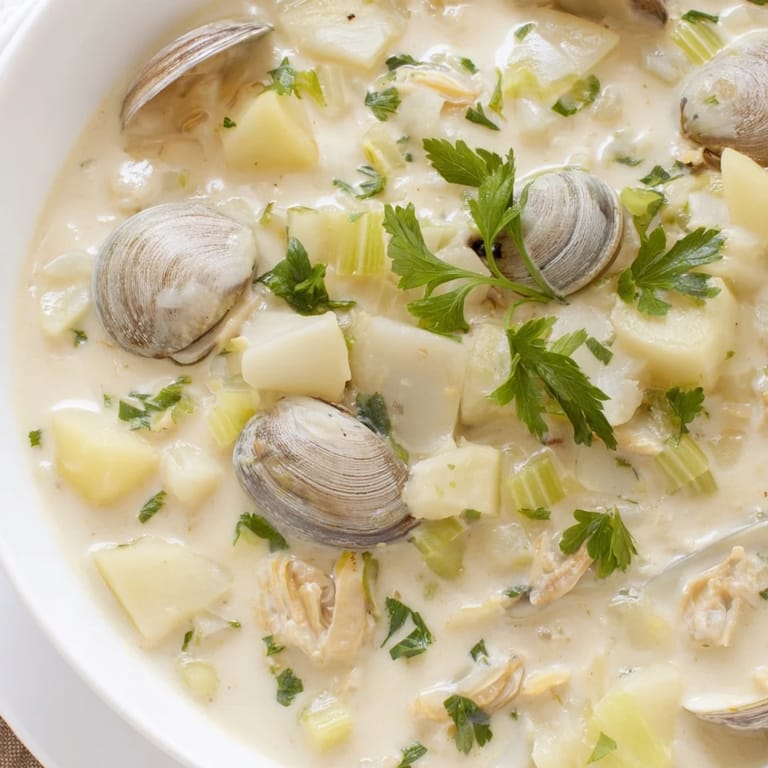
- Put them in a large pot with water, cover it, and let the steam do its work over medium heat for 5 to 7 minutes. You'll hear them click and smell the ocean. Once they open, scoop them out and let them cool enough to handle, then chop them and set aside with their cooking liquid.
- Build your flavor base:
- Melt butter in your pot and let those chopped vegetables—onion, celery, carrot—soften slowly for about 5 minutes, getting sweeter and silkier as they cook. Add the garlic for just one more minute so it wakes up without turning harsh.
- Make the roux without lumps:
- Sprinkle flour over everything and stir constantly for 2 minutes, letting it toast just slightly and smell toasty. This is where the magic of thickening begins.
- Whisk in the liquid slowly:
- Gradually pour in your clam juice, milk, and water while whisking, making sure no lumps form. It should feel silky and smooth, not gloppy.
- Simmer the potatoes until tender:
- Add the diced potatoes, bay leaf, thyme, salt, and pepper, then bring everything to a gentle simmer. Let it bubble softly for 15 to 20 minutes until the potatoes are fork-tender and have released a little starch to thicken the broth naturally.
- Finish with clams and cream:
- Stir in your chopped clams and heavy cream, then let it simmer gently for 5 more minutes—just enough time for the flavors to marry. Remove the bay leaf, taste, and adjust salt if needed.
- Serve with care:
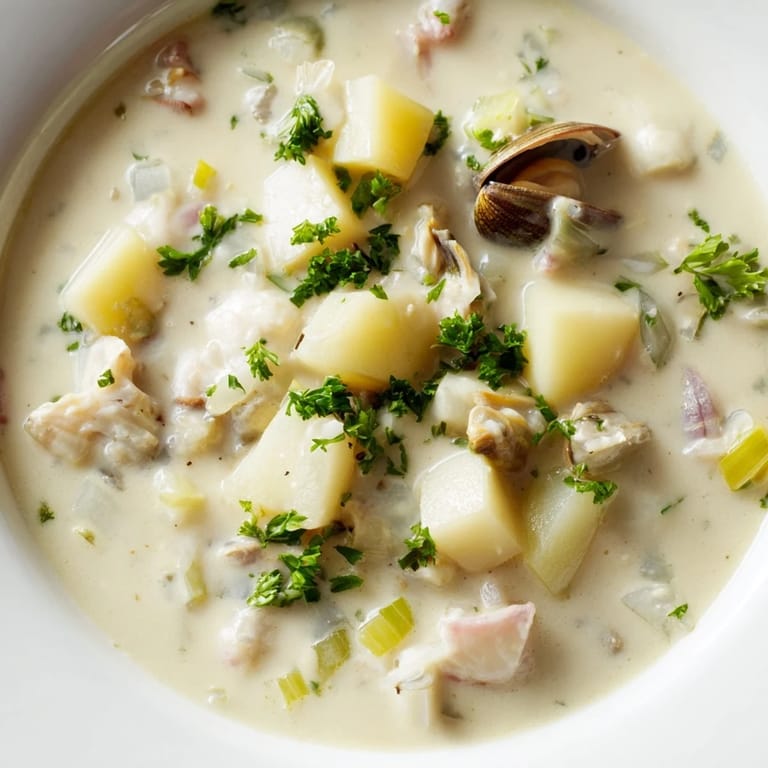
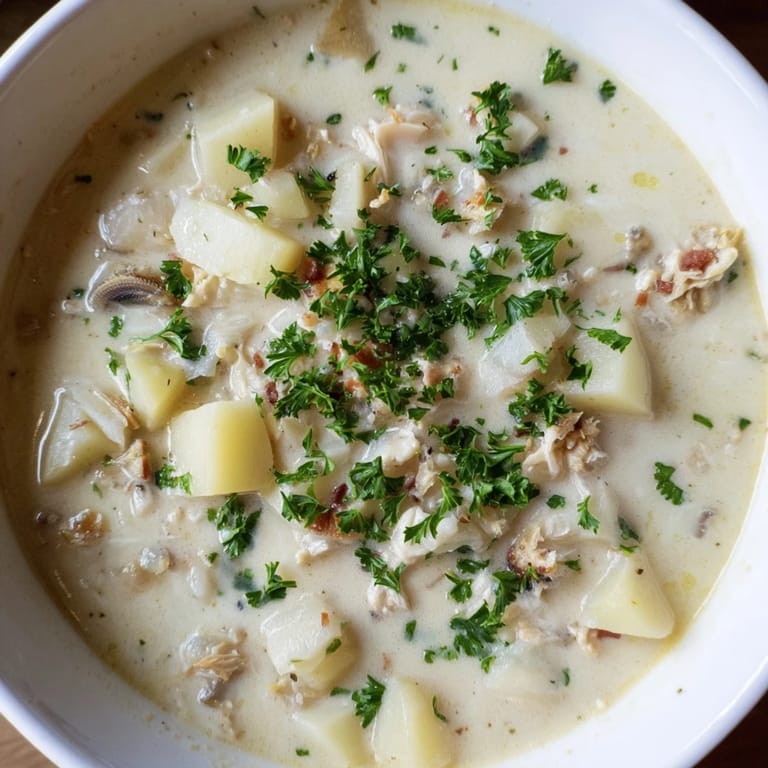
- Ladle it into bowls, scatter fresh parsley on top, and serve it hot with oyster crackers or crusty bread alongside.
 Pin it
 There's something about a chowder that makes people slow down. Conversations get quieter, more thoughtful. I've noticed that feeding someone this soup, watching them wrap their hands around a warm bowl on a cold day, feels like the closest thing to magic I know how to do in a kitchen.
Fresh Clams vs. Canned: When to Use Each
Fresh clams are worth seeking out if you love that fresh, briny taste and don't mind the small effort of steaming them. But honestly, canned clams are reliable, shelf-stable, and make an equally delicious chowder—I've made this soup with both and served it to the same people, and they couldn't tell the difference. The roux, the cream, the potatoes—those are what make this soup sing. The clams are just part of the chorus.
Making It Thicker or Thinner to Your Taste
If your chowder feels too thin, mash a few of the cooked potatoes right in the pot before you add the cream—they'll release their starch and thicken everything naturally. If it's too thick and you want it lighter, pour in a splash of milk or water and stir gently. Some days I like it thick enough to coat a spoon; other times I want it more like a cream soup. There's no single right answer, only your preference.
Variations That Make It Yours
Once you know how to make the basic version, you can play. Bacon lovers should sauté 3 or 4 chopped strips in the pot first and use the rendered fat instead of butter—it adds a smoky sweetness that plays beautifully with clams. For a lighter version, swap half-and-half for the heavy cream and you'll still have something creamy and comforting. Some people add a splash of white wine for acidity, or a pinch of cayenne for warmth.
- Try a roux made with bacon fat instead of butter for depth.
- A squeeze of lemon juice at the end brightens everything without making it taste fishy.
- Fresh thyme from your garden beats dried thyme almost every time.
 Pin it
 Clam chowder is one of those soups that tastes better when someone's sitting across from you while you eat it. Make it on a night when you need comfort, or when someone else does, and watch how a simple bowl of soup can become a small moment of warmth.
Recipe FAQs
- → How are the clams prepared before cooking?
Fresh clams are steamed until they open, then chopped. Any unopened clams are discarded. The cooking liquid is reserved to enhance the broth's flavor.
- → Can I use canned clams instead of fresh ones?
Yes, canned chopped clams and their juice can be used, supplementing the clam juice in the broth for a similar taste.
- → What thickens the chowder's broth?
A roux made by cooking flour with sautéed vegetables forms the base, providing a smooth and slightly thickened texture.
- → Are there alternatives to heavy cream in this chowder?
Half-and-half can be used for a lighter version, reducing richness while maintaining creaminess.
- → What side dishes complement this chowder?
Oyster crackers, crusty bread, or a crisp lager pair beautifully, enhancing the chowder's coastal flavors.