 Pin it
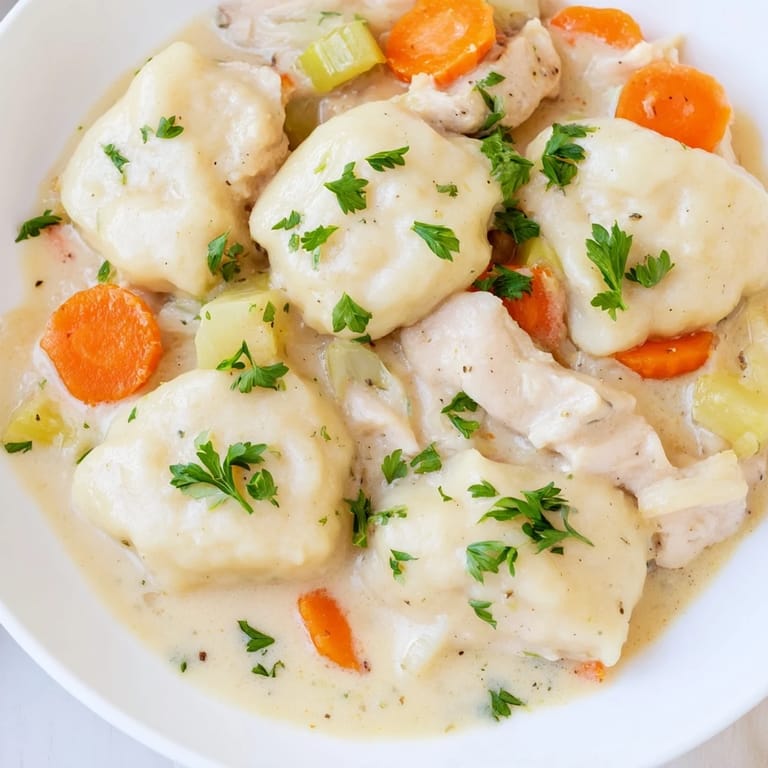
 There's something about the smell of chicken and dumplings simmering on a cold afternoon that instantly transports you back to feeling cared for. I learned to make this from watching my grandmother work through a pot of it, not really following a recipe, just knowing when the broth looked right and when the dumplings had puffed just enough. What struck me most was how she'd taste it halfway through and make tiny adjustments, never rushing, never overthinking it. That's when I realized this dish isn't about precision—it's about giving yourself permission to create something warm and generous for the people around you.
I made this for my partner on one of those evenings when we'd both had days that felt too long, and halfway through eating, they went quiet for a moment and just said, 'This is exactly what I needed.' There's real power in that—a dish that meets you exactly where you are emotionally, not just physically hungry.
Ingredients
- Boneless, skinless chicken thighs or breasts (2 lbs): Thighs stay more forgiving and juicy, but either works; cut them into chunks that feel comfortable to eat.
- Unsalted butter and olive oil (2 tbsp butter, 1 tbsp oil): Together they create a richer base than either alone, and the mix prevents the butter from burning.
- Onion, carrots, and celery (1 onion, 3 carrots, 2 celery stalks): This trio is the foundation—they soften into the broth and build flavor you can almost feel.
- Garlic (3 cloves): Adds a quiet depth that makes people ask what the secret is.
- All-purpose flour (1/4 cup): This creates a subtle thickening that happens as you cook, not the heavy-handed kind.
- Low-sodium chicken broth (6 cups): Low-sodium lets you control the salt and taste the actual chicken flavor.
- Whole milk or heavy cream (1 cup): The cream transforms the broth into something silky; whole milk works but feels less luxurious.
- Dried thyme, bay leaf, salt, and black pepper: Thyme and bay leaf build a subtle herbal note that doesn't shout.
- Frozen peas (1 cup): They go in at the end to keep their brightness and slight texture.
- Fresh parsley (2 tbsp, plus garnish): Scattered at the end, it adds color and a gentle fresh counterpoint.
- All-purpose flour for dumplings (2 cups): The base of those fluffy clouds.
- Baking powder (1 tbsp): This is what makes dumplings rise instead of sink.
- Melted unsalted butter (2 tbsp) and whole milk (3/4 cup): These two make the dough tender and just barely cohesive.
Tired of Takeout? 🥡
Get 10 meals you can make faster than delivery arrives. Seriously.
One email. No spam. Unsubscribe anytime.
Instructions
- Build Your Base:
- Heat butter and oil in a large Dutch oven over medium heat, then add diced onion, carrots, and celery. Sauté for about 5 minutes, stirring occasionally—you're looking for them to soften and become fragrant, not brown. When they smell sweet and tender, you'll know they're ready.
- Wake Up the Flavors:
- Stir in minced garlic and cook for just 1 minute until it fills the kitchen with that unmistakable aroma. Then sprinkle flour over everything and stir well, cooking for another 2 minutes while stirring frequently—this toasts the flour slightly and prevents lumps later.
- Create the Broth:
- Gradually pour in chicken broth while stirring constantly, making sure the flour dissolves smoothly into the liquid. It should look creamy and light, not thick or cloudy.
- Cook the Chicken:
- Add chicken chunks, thyme, bay leaf, salt, and pepper, then bring everything to a boil. Once it's bubbling, reduce heat to medium-low, cover, and simmer for about 20 minutes until the chicken is cooked through and tender—you should be able to break a piece easily with a spoon.
- Finish the Stew:
- Remove the bay leaf (always easy to spot floating on top), then stir in milk or cream, peas, and fresh parsley. Let it simmer uncovered while you make the dumplings—this keeps it warm and lets flavors mingle.
- Mix the Dumplings:
- In a separate bowl, whisk together flour, baking powder, and salt. Stir in melted butter and milk until just combined—the dough should be lumpy and shaggy, not smooth, or the dumplings will be dense instead of fluffy.
- Drop and Cover:
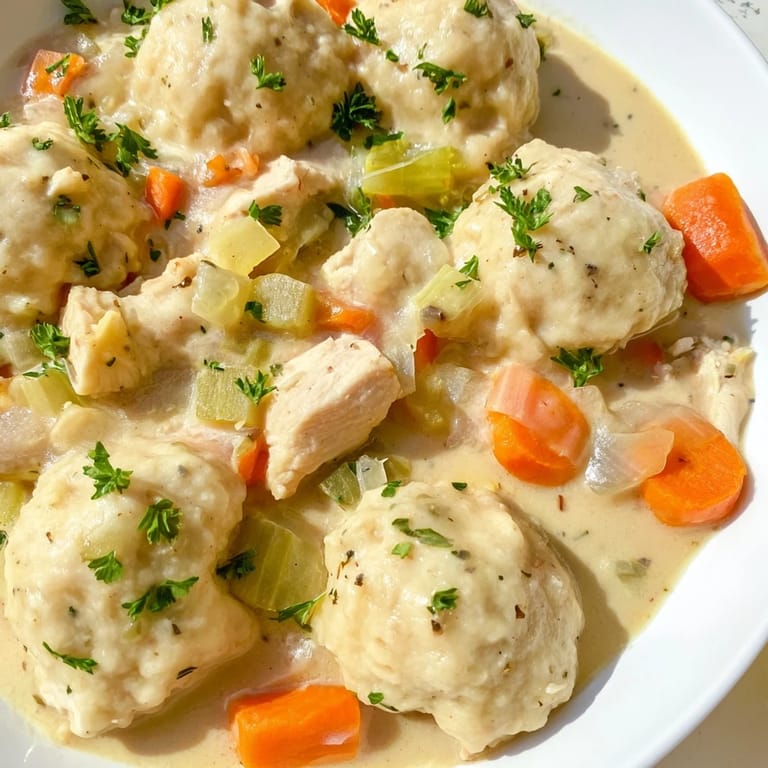
- Using a spoon or small scoop, drop mounds of dough (about 2 tablespoons each) directly onto the surface of the simmering stew, spacing them so they have room to puff. Cover the pot with a lid and turn heat to low—this is crucial—and simmer without lifting the lid for 15 minutes.
- Finish and Serve:
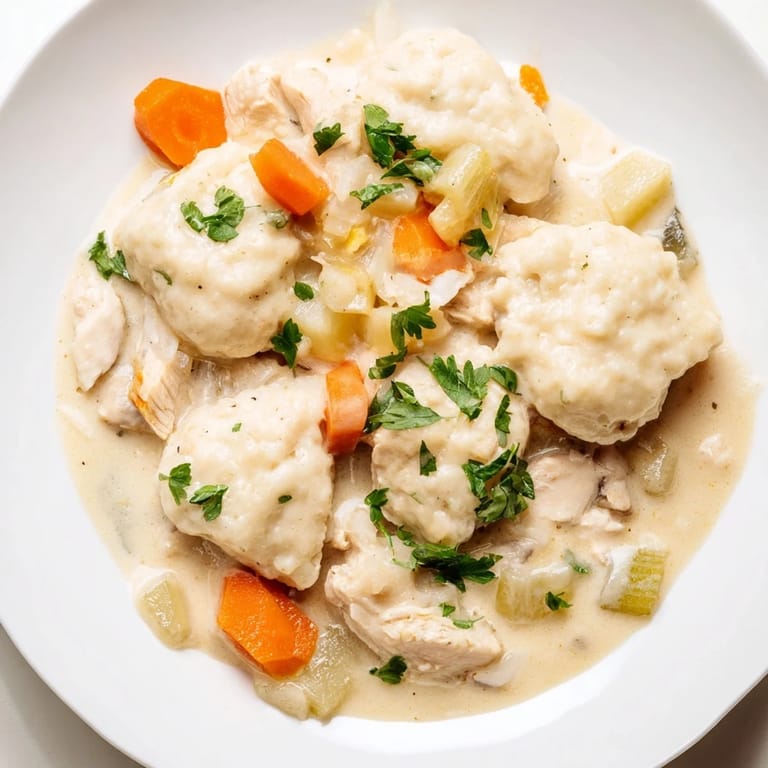
- After 15 minutes, the dumplings should be puffed and cooked through. Taste the broth, add more salt or pepper if needed, then ladle into bowls and garnish with fresh parsley.
 Pin it
 I learned the no-peeking rule the hard way, of course, lifting the lid at minute 10 because I was nervous, and watching my beautiful dumplings deflate slightly. They were still good, but I've never done it again. Now I set a timer, trust the process, and use those 15 minutes to set the table or pour a glass of wine.
Why This Dish Feels Like Home
Chicken and dumplings lives in that space between simple and impressive. It doesn't require fancy techniques or unusual ingredients, yet somehow it tastes like someone really cared about you. Maybe that's because the long simmer and the gentle dumpling steam create an atmosphere of slowness in a world that rarely gives us that anymore. Or maybe it's just the comfort of knowing exactly what you're getting—creamy, warm, nourishing, and finished in under two hours.
Small Adjustments That Make a Difference
Once you've made this a few times, you'll start understanding your own preferences. Some people love a splash of dry white wine added with the broth—it brings a subtle brightness that cuts through the richness. Others swap half the chicken for turkey, which feels lighter without losing that satisfying heartiness. A pinch of nutmeg, barely noticeable, can transform the dumpling dough. The beauty is that this recipe is forgiving enough to bend a little and still sing.
The Dumpling Question
I've had versions where dumplings cook separately and get added after, which is fine but feels like extra steps. The magic of cooking them directly on the stew is that they absorb all that flavor while steaming, becoming almost spongy in the best way. Plus, they're already in the bowl when you serve, exactly where they need to be. For a lighter version, you can swap whole milk for half-and-half or low-fat milk, though you'll lose a bit of that velvety feeling in the broth—it's a trade, not a loss.
- Fresh parsley as a garnish isn't just decoration; it adds a bright note that balances the richness.
- Ladle carefully so each bowl gets chicken, broth, peas, and at least one dumpling.
- Serve this hot, straight from the pot—it's not a dish that improves when it cools down.
 Pin it
 This is the kind of recipe that gets better each time you make it, not because it changes, but because you do. You'll develop a feel for when the broth is right, when the dumplings need that extra minute, when a pinch of something is calling to you. That's the real magic of cooking—turning a recipe into a ritual.
Recipe FAQs
- → What cut of chicken works best?
Boneless, skinless thighs or breasts ensure tender pieces that cook evenly in the stew.
- → How do I achieve fluffy dumplings?
Gently mix dumpling ingredients without overworking the dough, and simmer covered without lifting the lid to trap steam.
- → Can I use a different milk option?
Whole milk, heavy cream, or half-and-half can be used for creaminess while keeping the broth rich and smooth.
- → What herbs add best flavor?
Thyme and bay leaf provide a subtle herbal aroma that complements the savory stew base.
- → How to store leftovers?
Keep cooled stew and dumplings in airtight containers refrigerated up to 3 days; reheat gently to preserve texture.