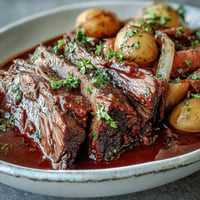
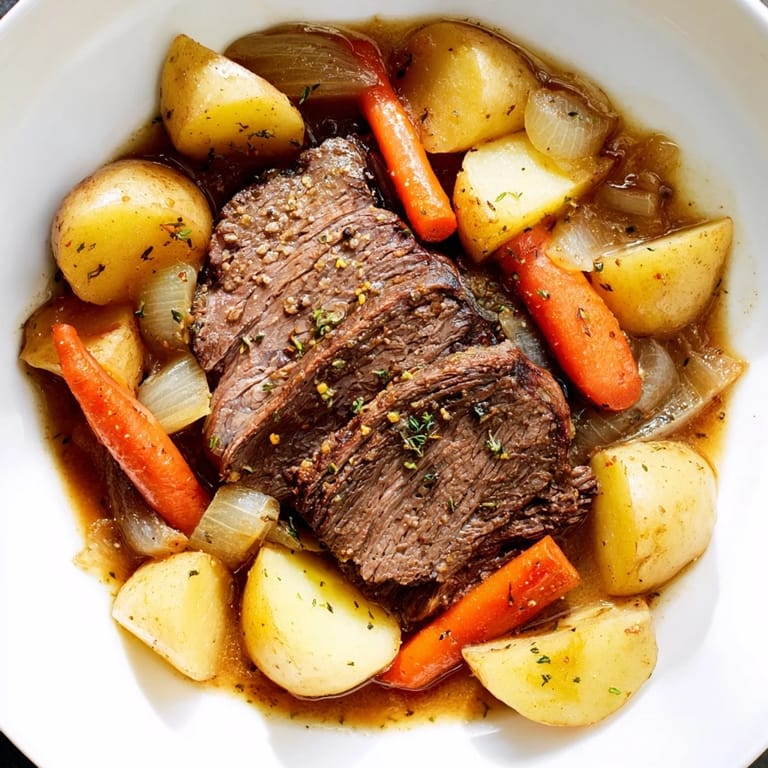
 Pin it
 There's something about a pot roast that stops time in a kitchen. My grandmother used to make this on Sunday afternoons, and the smell would drift through the entire house by the time we arrived for dinner. I didn't learn to cook it until years later, when I realized those three-and-a-half hours of waiting were part of the magic—the anticipation, the low sizzle, the way the house fills with this impossible aroma of caramelized beef and burgundy wine. Now when I make it, I'm not just cooking; I'm recreating that exact feeling of coming home to something made with time and care.
I served this to my partner on a cold January evening when we'd both had the kind of day that only soup or stew can fix. The moment we sat down and he took that first bite, tasting the wine-braised beef with the fork-tender potatoes, he just smiled without saying anything. That silence said more than words—it was the kind of meal that makes you feel looked after.
Ingredients
- Chuck roast (3–4 lb): This cut has the fat and connective tissue that transforms into gelatin during the long braise, making the meat impossibly tender and giving the gravy its silky body.
- Kosher salt and black pepper: Season generously before searing; this crust is your foundation for flavor.
- Olive oil: High heat will be your ally here to get that deep, caramelized sear on the meat.
- Yukon Gold potatoes: They hold their shape better than russets and have a waxy, buttery quality that absorbs the braising liquid beautifully.
- Carrots and onions: These aren't just vegetables; they're aromatics that break down into the gravy, adding natural sweetness and body.
- Garlic: Smash it rather than mince it so it flavors the liquid without breaking apart completely.
- Beef broth: Use a good quality broth or homemade if you have it; this is your braising liquid's backbone.
- Red wine: The acidity cuts through the richness and adds depth that you can't replicate with broth alone—it's worth the splash.
- Tomato paste: A small amount adds umami and helps build that deep, savory gravy without making it taste tomatoey.
- Worcestershire sauce: Trust it; this ingredient makes people ask what your secret is.
- Thyme and bay leaves: Fresh thyme is lovely, but dried works just as well and is less fussy.
- Flour or cornstarch: Choose cornstarch if you're going gluten-free; it thickens just as effectively.
Tired of Takeout? 🥡
Get 10 meals you can make faster than delivery arrives. Seriously.
One email. No spam. Unsubscribe anytime.
Instructions
- Get your oven ready and prepare the beef:
- Preheat your oven to 300°F and pat the roast completely dry with paper towels—this is the move that gets you a proper sear. Season all sides generously with salt and pepper and let it sit for a minute so the seasoning can stick.
- Sear the roast until it's a deep golden brown:
- Heat olive oil in your Dutch oven over medium-high heat until it shimmers, then carefully lay in the roast. Don't move it for 4–5 minutes; you want that crust to develop. Flip and sear the other sides until all exposed surfaces are deeply browned, which takes about 15 minutes total.
- Build flavor with aromatics:
- Remove the roast, then add the onions and garlic to the pot with all that lovely browned fond stuck to the bottom. Sauté for 2–3 minutes until the kitchen smells like caramelized onions, then stir in the tomato paste and cook for one minute more to deepen its flavor.
- Deglaze and add your liquids:
- Pour in the red wine and scrape up every bit of that brown crusty goodness on the pot bottom; it's called fond and it's pure flavor. Once it's incorporated, return the roast to the pot and add the beef broth, Worcestershire sauce, thyme, and bay leaves.
- Arrange vegetables and braise low and slow:
- Nestle the potatoes and carrots around the beef so they'll cook in the braising liquid and soak up all that savory flavor. Cover the pot with a lid and slide it into the 300°F oven for 3 to 3½ hours, checking once halfway through to make sure nothing is sticking.
- Test for doneness and make your gravy:
- The roast is ready when a fork slides through it like butter and the vegetables are tender. Transfer everything to a platter, then skim any excess fat from the cooking liquid if you prefer a lighter gravy.
- Thicken the gravy to silky perfection:
- Whisk flour and cold water together until completely smooth, then slowly stir it into the pot and simmer over medium heat for 3–5 minutes, whisking constantly, until it coats the back of a spoon. Taste and adjust seasonings if needed.
- Slice and serve:
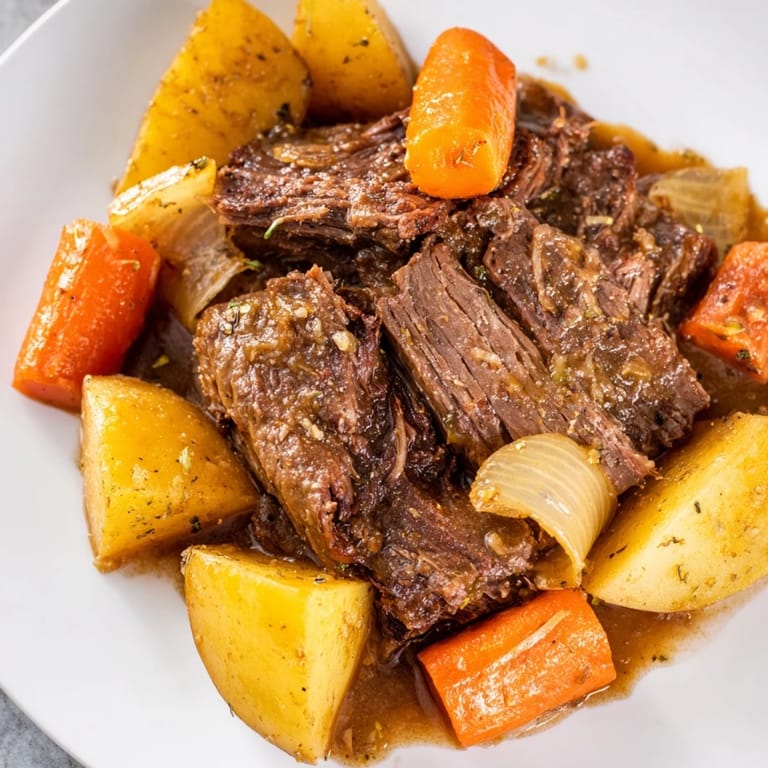
- Slice the roast, arrange it on a platter with the vegetables, and pour that gorgeous gravy over everything. Serve immediately while it's hot and the steam rises off the plate.
 Pin it
 The first time my kitchen was quiet enough to appreciate a pot roast was when I was cooking alone on a Tuesday night. No rush, no performance, just me and the Dutch oven and three hours to think about nothing in particular. That's when I understood why people make this dish—it's not just dinner, it's permission to slow down.
What Makes This Different
Most pot roasts are just beef in broth, which is fine, but this one has a secret: the wine and tomato paste build layers of flavor that make people pause mid-bite and wonder what they're tasting. The red wine adds a subtle acidity that keeps the richness from feeling heavy, and the tomato paste brings an umami depth that makes the gravy something you'd want to drink straight from the bowl. The vegetables aren't just sides; they break down into the liquid and become part of the sauce, which is why the gravy tastes so full and complex instead of thin and one-note.
Timing and Make-Ahead Options
The beauty of this dish is that it actually improves if you make it a day ahead. The flavors meld and deepen overnight in the refrigerator, and the fat solidifies on top so you can lift it off easily before reheating. You can also prep all your vegetables the night before and store them separately, so on cooking day it's truly just about assembly and time. If you're cooking it on the same day, the 20-minute prep time is mostly cutting vegetables, and everything else is hands-off in the oven.
Variations Worth Trying
This recipe is your foundation, but it welcomes experimentation. Add parsnips or celery for extra sweetness, use an earthy Burgundy wine instead of a Cabernet for a different flavor profile, or swap half the beef broth for beef stock if you want an even richer gravy. Some people add a splash of balsamic vinegar for complexity, and others tie a sprig of rosemary with the thyme. The structure stays the same, but these small shifts let you make it your own.
- Serve with crusty bread to soak up every drop of gravy—this is non-negotiable.
- Leftovers make the best sandwiches the next day on good bread with horseradish cream.
- Pair with a robust red wine like Cabernet Sauvignon or even the same wine you braise with.
 Pin it
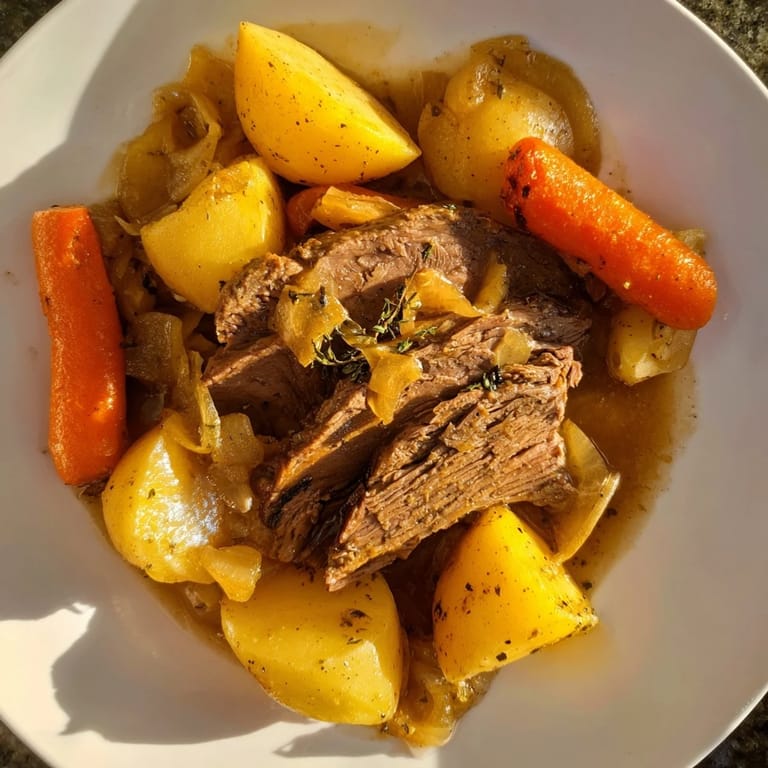
 Make this dish when you want your kitchen to smell like love and when you have three hours to give. It's the kind of meal that makes people grateful to be at your table.
Recipe FAQs
- → What cut of beef is best for this dish?
Chuck roast is ideal due to its marbling which breaks down during slow cooking, resulting in tender, flavorful meat.
- → Can I prepare this in a slow cooker?
Yes, sear the beef first, then transfer all ingredients to a slow cooker and braise on low for 6-8 hours for tender results.
- → How do I make the gravy thicker?
Whisk flour or cornstarch with cold water and simmer in the cooking liquid while whisking until the gravy thickens to your liking.
- → Is red wine necessary in the cooking liquid?
Red wine adds depth and richness, but you can substitute it with additional beef broth if preferred.
- → What vegetables work best for this dish?
Potatoes, carrots, and onions are classic choices that soften and absorb flavors, but parsnips or celery can be added for variation.